
Hospital furniture fire safety compliance 2026 is no longer a single-certificate question. For upholstered seating, the document set now has to prove three separate things: that the upholstery composite passed a recognised fire test, that the panel substrate behind it sits inside a defined formaldehyde emission class, and that the product’s intended purpose has been stated in writing so the buyer knows which rule actually governs the order. Commission Regulation (EU) 2026/1 establishes harmonised fire-safety requirements for upholstered furniture placed on the EU market, with a transitional window before mandatory application (EUR-Lex). Separately, the formaldehyde limit for wood-based panels under Regulation (EU) 2023/1464 has applied since 6 August 2026 (EUR-Lex). This article is about the paperwork that connects those two rules to a real purchase order — the requirements document you send, and the evidence you accept back.
What the 2026 EU upholstered-furniture fire rule changes in sourcing terms
The practical shift is from component testing to composite testing. Under the harmonised EU fire-safety requirements for upholstered furniture, the performance claim attaches to the finished upholstery assembly — foam, cover fabric, and any interliner, tested together as they will be supplied. A certificate that covers only the foam block is not evidence for the chair.
For a hospital seating order, that changes what you write into the requirements document. Instead of ‘fire-retardant foam, certificate required’, the specification line becomes: ‘upholstery composite (foam grade + cover article + interliner if used) tested to the applicable harmonised method; declaration of conformity to cite the exact regulation and version; test report to name the production site.’
The transition window matters commercially. Buyers placing orders during the transition can still receive product under the previous national arrangements in some markets, but the declaration you hold at handover should already point to the incoming harmonised requirement. If your project completes after the mandatory application date and your supplier’s file still cites a withdrawn national test, you carry the re-testing cost.
Two consequences for the RFQ:
- Ask for the composite test report, not a foam datasheet. If the supplier cannot produce one, the fire claim is unverified for your specific chair.
- Ask which regulation and version the declaration of conformity cites. A declaration without a version reference cannot be checked against the current text.
Formaldehyde in seating substrates: which frames and panels are now caught
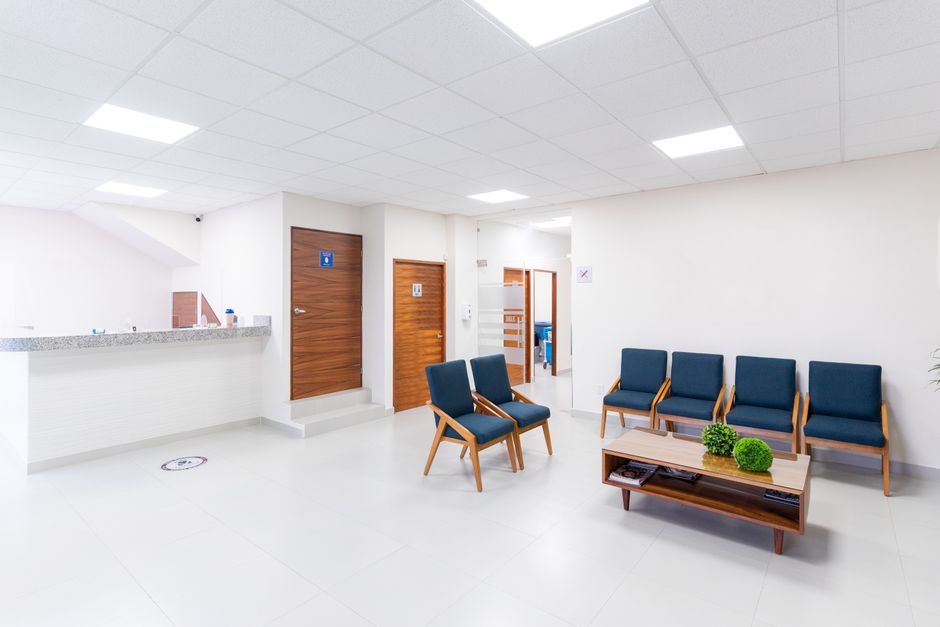
Upholstered hospital seating rarely sits on a metal frame alone. Waiting-room benches, patient bedside chairs, bariatric seating, and examination stools commonly use plywood or MDF in the seat pan, back panel, or armrest core. Those panels are wood-based articles, and the formaldehyde restriction applies to them.
The EU formaldehyde limit for wood-based panels has applied since 6 August 2026 (EUR-Lex). The European Chemicals Agency publishes guidance on how the restriction applies to panels, articles and their emission classes (ECHA). For a buyer, the operative question is not the chemistry — it is whether the supplier’s file names the emission class and the test standard for the exact panel grade used in your chair.
Where this fails in practice: the supplier sends a formaldehyde declaration that references an older standard, or covers a panel grade the factory no longer buys. Both are common. The requirements document should therefore lock the panel grade by specification number, not by trade name, and require the emission evidence to name the same grade.
Panel selection also interacts with infection control. A higher-density, better-sealed panel may hold up to repeated disinfectant wiping better than a low-cost alternative, but the sealing method and edge treatment change the surface performance. If your infection-control team has specified a wipe-down regime, the panel and edge specification should be written into the same document as the formaldehyde evidence, so the two cannot drift apart.
CE, MDR and intended purpose: why most hospital chairs are furniture, not devices
This is the section that prevents the most expensive mistake in a healthcare seating tender: assuming CE marking is universally required.
Under Regulation (EU) 2017/745, medical device status — and therefore CE marking under MDR — depends on the intended medical purpose as defined in Article 2 and on the resulting product classification (EUR-Lex). A standard waiting-room chair, a visitor seat, or a general bedside chair sold as furniture does not acquire a medical intended purpose because it is delivered to a hospital. It follows general product-safety and material rules instead.
The EU’s general framework for furniture product safety, conformity documentation and importer identification is set out by the European Commission (European Commission). That framework — not MDR — is where most hospital seating sits.
Where the line moves: if the product is placed on the market with a medical intended purpose, or if the supplier’s own marketing makes a clinical claim, MDR logic can apply, and the conformity route, risk class and any notified-body involvement follow from the classification. The buyer-side action is simple and belongs in the requirements document:
- Require a written statement of intended purpose for every seating line in the order.
- Require the supplier to confirm in writing whether any medical claim is being made for that item.
- If a medical claim is made, require the classification rationale and the applicable conformity route before the order is confirmed.
This protects both sides. It also stops a supplier from attaching a CE mark to a product that has no medical intended purpose, which creates a different compliance problem at the destination customs point.
The requirements document: eight items to request in a 2026 healthcare seating RFQ
The following checklist is a buyer-side recommendation, not regulatory text. It reflects what actually gets checked at destination and what causes holds at the port or at handover.
| # | Document | What it must show | Common failure mode |
|---|---|---|---|
| 1 | Declaration of conformity — fire performance | Exact regulation and version cited; upholstery composite named as tested assembly | Foam-only certificate presented as composite evidence |
| 2 | Composite fire test report | Foam + cover + interliner tested together; production site named; report within validity | No calendar validity; no site link |
| 3 | Formaldehyde emission evidence — panel substrate | Emission class and test standard named; matches the panel grade specified | References an older standard or a discontinued grade |
| 4 | Cover-material data — cleanability and disinfectant compatibility | Compatibility with the buyer’s stated wipe-down chemistry | Fire-retardant treatment degrades under repeated chlorine or quat wiping |
| 5 | Labelling and language statement | Manufacturer/retailer identity and importer details as required for EU furniture labelling | Label text not in destination language; importer field blank |
| 6 | Written statement of intended purpose | Per seating line; confirms whether a medical claim is made | Absent entirely; left to the buyer to infer |
| 7 | Change-control clause acknowledgement | Substitution of cover, foam or interliner voids the fire declaration | No documented re-qualification process |
| 8 | Pre-production sample record | Samples cut from the actual production batch, not a showroom set | Sample from a different batch than the shipped goods |
Eight items is not a bureaucratic preference. Each one maps to a specific failure that has held healthcare seating at a port or forced re-upholstery after delivery. The requirements document should list them as a numbered schedule, with a response column the supplier fills in and returns before the order is accepted.

Where Chinese supplier evidence usually fails — and why capability is not the problem
The recurring gaps in healthcare seating tenders are consistent and predictable.
First, fire test reports covering only the foam, not the finished composite. This is the single most common defect, and it usually comes from a supplier who has a foam supplier’s certificate on file and treats it as the product’s evidence.
Second, certificates with no calendar validity and no link to the specific production site. A report that could have been issued at any factory at any time does not verify the goods you are buying.
Third, formaldehyde declarations referencing an older standard, or naming a panel grade that differs from the one in the bill of materials.
Fourth, no documented process for re-qualifying a fabric after the buyer’s own design change. This is a buyer-side risk as much as a supplier-side one: if your design team changes the cover article after the fire declaration is issued, the declaration no longer describes the product.
None of these gaps reflect a lack of testing capacity. Independent laboratories inside China routinely issue composite fire and emission reports for furniture, and the panel-production base is mature. The sourcing decision is about verification discipline — whether the supplier’s file is organised around your destination market’s rules, and whether the supplier will accept a change-control clause that costs them money if they substitute a component.
Contract and QC plan: spec locking, retesting clauses and inspection scope
The requirements document only has force if the contract and the inspection plan carry it. Four clauses do most of the work.
Spec locking by number, not trade name. Lock the cover fabric and foam grades by specification number and by named sub-supplier. Trade names change between seasons and between factories; specification numbers and supplier identities can be audited.
Pre-production samples from the production batch. Require samples to be cut from the actual production run, not from a showroom or a previous order. This is the only way the fire composite evidence and the shipped goods describe the same assembly.
Change-control and retesting at supplier cost. Any substitution of cover, foam or interliner voids the fire declaration and triggers retesting at the supplier’s expense. This clause is what converts a document pack into a control system.
Final random inspection with a destination-specific brief. The inspection brief should name the destination-market regulation and require the inspector to check label wording, product marking, and pack quantity against the requirements document — not just cosmetic condition.
For buyers who need the panel and surface side of this in more depth, the wood-based panel requirements and the EU formaldehyde classification logic are covered in our guides on medical wood-based panel standard requirements and EU formaldehyde limit and medical furniture classification. Those two topics sit directly behind the seating substrate evidence described here.
Beyond the EU: why US, UK, Gulf and APAC buyers must not import the EU assumption
The most expensive error in this area is exporting one market’s assumption to another. The EU fire-safety and formaldehyde rules described above are EU market rules. They do not govern a hospital seating order delivered to Texas, Riyadh, Manchester or Singapore.
US, UK, Gulf, Australian and Southeast Asian healthcare seating markets each set their own fire, accessibility and material requirements, and several are driven by healthcare-facility codes rather than by furniture law. That distinction changes which document you ask for. A facility-code-driven market may require evidence tied to the healthcare operator’s own specification, not a furniture regulation.
The buyer-side action is to resolve this before the purchase order, not after the container lands:
- Ask the destination hospital authority or the project specifier which local rule governs the seating.
- Write that rule into the requirements document by name and version.
- Require the supplier’s declaration to cite that rule — not a generic international standard.
If the destination rule is not yet confirmed at RFQ stage, mark the compliance schedule as open and hold the order confirmation until it is closed. Accepting a supplier’s default certificate and hoping it satisfies the local authority is the failure mode that produces re-upholstery after installation.

Labelling, pack marking and importer duties at destination
Compliance does not end at the factory gate. For EU furniture, the general framework places conformity documentation and importer identification obligations on the parties placing the product on the market (European Commission). In practice, this means the label and the pack marking must be checked against the requirements document before shipment, not after arrival.
Three checks belong in the pre-shipment inspection scope:
- Label wording in the destination language, with manufacturer/retailer identity and importer details present and correctly spelled.
- Product marking matching the model and specification number in the order.
- Pack quantity and pack marking matching the shipping documents, so the receiving hospital can reconcile the delivery against the order.
Where a project involves multiple seating lines — waiting areas, patient rooms, staff rooms, discharge lounges — the label and marking check should be run per line, because a single mislabelled line can hold an entire container at the port.
How we handle this at ZHOBAI
Our engineering team builds the compliance schedule into the project file from the specification stage, so the fire composite evidence, the panel emission class, the intended-purpose statement and the labelling text are treated as one package rather than four separate requests. For seating projects, we can provide third-party composite fire and emission reports from independent laboratories, a written intended-purpose statement per line, and a change-control acknowledgement naming the cover, foam and interliner grades. Buyers who want to see how this works across a full fit-out can review the Jiangsu Provincial People’s Hospital project and our certifications and documentation page for the current document set.
RFQ and inspection checklist for 2026 seating orders
Use this as the closing schedule in the requirements document. Each line should have a supplier response and a buyer verification step.
- Intended purpose stated in writing for every seating line, with confirmation of whether any medical claim is made.
- Declaration of conformity for fire performance, citing the exact regulation and version, covering the upholstery composite.
- Composite fire test report naming foam, cover and interliner, with production site and validity period.
- Formaldehyde emission evidence for the panel substrate, naming the emission class, the test standard and the exact panel grade in the bill of materials.
- Cover-material cleanability and disinfectant-compatibility data matched to the buyer’s stated wipe-down chemistry.
- Labelling and language statement covering manufacturer/retailer identity and importer details, in the destination language.
- Specification numbers and named sub-suppliers for cover fabric, foam and interliner, locked before order confirmation.
- Pre-production samples cut from the actual production batch, with batch reference recorded.
- Change-control clause acknowledged: substitution of cover, foam or interliner voids the fire declaration and triggers retesting at supplier cost.
- Final random inspection brief naming the destination-market regulation and covering label wording, product marking and pack quantity.
- Destination-market rule confirmed by the hospital authority or specifier and written into the compliance schedule before the purchase order.
Run this checklist as a gate, not a formality. The orders that go wrong are the ones where the composite report was assumed, the panel grade was left to the factory, or the destination rule was resolved after the container was booked. A requirements document that forces those three questions to be answered before the order is confirmed is the cheapest compliance instrument in the project.
ZHOBAI Medical Furniture
Ready to Apply These Principles to Your Project?
Our engineering team responds to all project briefs within 24 hours. Share your FF&E scope — room count, property type, target timeline, and budget range — and we’ll provide a factory-direct assessment and indicative pricing within one business day.