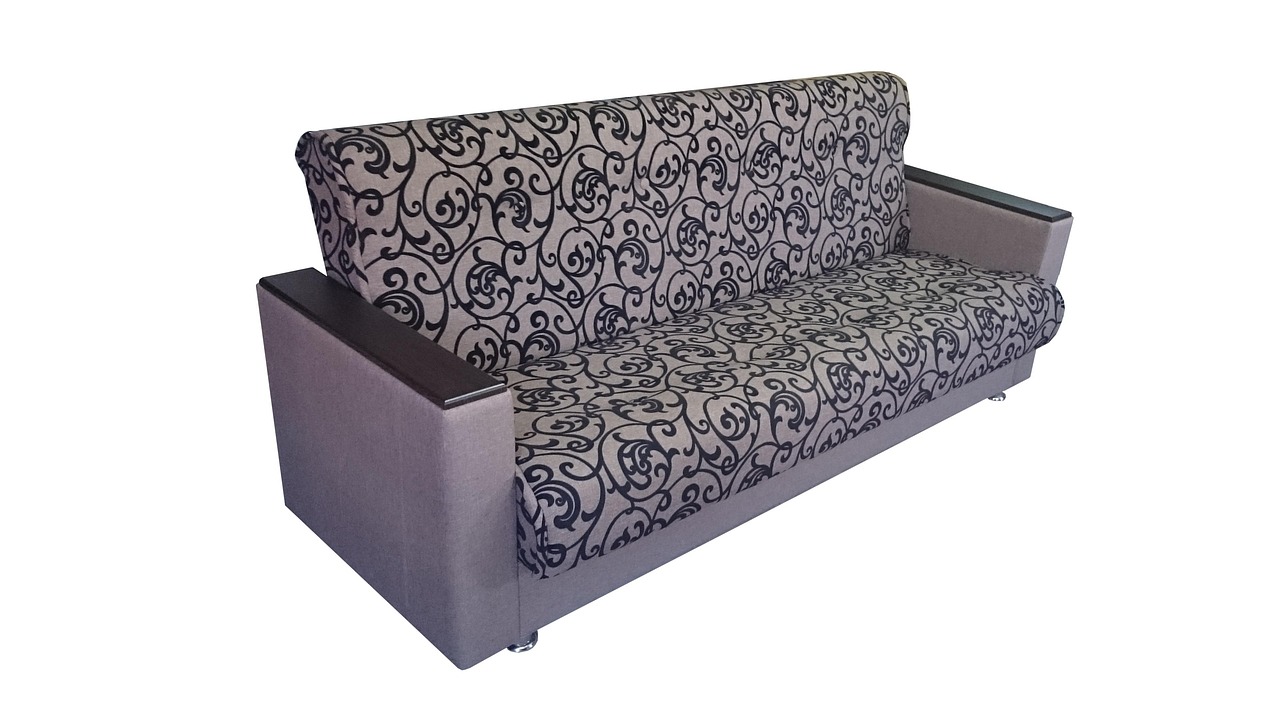
A hospital furniture package is not successfully delivered when the container reaches the port. It is delivered when the correct components arrive in the correct sequence, pass inspection and can be installed in the intended rooms without unnecessary storage, handling or replacement. Cross-border FF&E logistics therefore begins with the room schedule and installation plan, not with the freight booking. This article examines how to embed healthcare ff&e logistics risk management from factory packing through final room delivery, using the specific challenges of African and Middle East large hospital projects as the reference frame.

The blueprint for this analysis is the structured approach to packaging engineering, phased release, and site delivery control that separates projects that open on time from those that accumulate cost overruns. As covered in our guide on comprehensive procurement strategies, the same principles apply across geographies.
Learn more about our guide on packaging engineering.
The Four Categories of Cross-Border FF&E Loss of Control
In long-distance import projects, four distinct failure modes account for the majority of logistics-driven delays and cost overruns. Recognizing them is the first step in systematic healthcare ff&e logistics risk management.
Volumetric Inefficiency
Assembled furniture contains internal voids, non-stackable shapes, and over-packaging that inflate the chargeable cubic meter (CBM). A typical 40HQ container loaded with fully assembled nurse stations may achieve only 55–60% utilization of available volume. Switching to a flat-pack design can raise utilization to 80–85%, but only if the packaging engineer balances CBM against structural protection, weight distribution, and unloading sequence. The goal is not maximum fill rate but optimal net product CBM per container without compromising damage prevention.

Sequence Failure
When later-installed furniture (e.g., patient room casework) arrives before early-installed items (e.g., fixed clinical casework), the result is double handling, storage costs, and installation crew idle time. A phased delivery plan must align each shipment with the site’s construction progress. To avoid this, a phased hospital furniture delivery schedule should be part of the procurement contract from the start.

Transit Environment
Enclosed containers experience temperature swings, condensation, salt spray, vibration, and multiple transshipments. These can damage board coatings, laminate surfaces, glass, and hardware. The IMO/ILO/UNECE CTU Code provides guidelines for cargo securing and condensation control. Moisture protection requires dried packaging materials, desiccant calculation, and vapor barriers. No packaging can guarantee zero damage, but systematic protection reduces the probability to measurable levels.
Information and Site Readiness Mismatch
Mismatches between packing lists, HS codes, certificates of origin, delivery addresses, unloading equipment, and finished surface conditions turn logistics delays into site stoppages. A single missing component can delay an entire clinical wing. Standardized labeling per ISO 780:2015 and room-level barcode systems mitigate this risk.
Auditable KD Packaging and Engineering Methods
Knock-down (KD) packaging is not a single technique but a system of decisions about BOM decomposition, material selection, CBM, weight, lashing, moisture control, testing, and labeling. Each decision must be auditable and traceable to project requirements. The following table maps product types to recommended protection strategies.
| Product Type | Primary Risk | Recommended Protection | Verification Method |
|---|---|---|---|
| KD panel casework | Corner impact, moisture, scratching, missing parts | Moisture-proof inner bag, corner guards, interlayer sheets, room-level kit packing, dried packaging materials | Sample packing, weight check, drop/vibration test per ISTA procedure |
| Metal nurse station frame | Coating scratch, deformation, rust | Non-abrasive separators, fixed supports, moisture barrier, anti-corrosion coating, center-of-gravity marking | Pre-stuffing inspection, lashing verification, arrival spot check |
| Countertops / solid surface / glass | Bending, edge impact, breakage | Vertical or dedicated rack, soft separators, no flat stacking, vibration limit indicators | Pack engineering review, transport simulation |
| Hardware and accessories | Loss, mix-up, moisture | Room-level kit in sealed small box, barcode, spare pack | Barcode scan, room BOM reconciliation |
For flat pack medical furniture packaging, the key KPIs include packing density (net product CBM ÷ packed CBM), container utilization (actual loaded CBM ÷ planned available CBM), value per container, damage-free receipt rate, room-complete rate, and search-and-sort time per container. These metrics allow project managers to compare packaging proposals objectively. Preventing transit damage requires a packaging engineer who can select the correct ISTA test procedure based on product weight, fragility, and distribution route. Simply stating “ISTA-certified” without specifying the test level is insufficient.
Phased Delivery and Controlled JIT Execution
Just-in-time (JIT) delivery in cross-border FF&E should not be confused with zero buffer. International shipping and customs contain variability that no manufacturer can eliminate. A resilient JIT plan uses site-readiness gates, phased releases, installation-ready room kits, and an agreed buffer sized to the route and project risk. This approach to just in time healthcare ff&e shipping prioritizes alignment with site readiness over minimum inventory.
The delivery phases for a typical large hospital project are:
- Phase 0 – Enabling Components: Embedded tracks, wall brackets, base plates that must coordinate with MEP and finishes. Ship only after interface approval.
- Phase 1 – Fixed Clinical Casework: Treatment room, nurse station frames, fixed cabinets. Site must have completed walls, floors, utility points, and installation access.
- Phase 2 – Patient Room Packages: Wardrobes, bedside units, tables, chairs per room-kit. Deliver by floor or nursing unit as room-complete sets.
- Phase 3 – Public and Loose Furniture: Waiting seating, office desks, movable carts. Enter after dust-generating work ends and cleaning/security is in place.
- Phase 4 – Spares and Close-out: Replacements, warranty materials, as-built documents, tool recovery.
Each shipment must pass a Site Readiness Gate: the zone is formally handed over with finished surfaces and MEP points checked; unloading equipment, access routes, and temporary storage (dry, lockable, not open ground) are confirmed; the latest room status matches the shipment BOM; and installation crew, tools, and safety permits are ready. Without these gates, phased hospital furniture delivery becomes sequential dumping. A buffer of 2–4 weeks per phase, sized to the route’s historical variability, prevents site stoppage without becoming dead inventory.
Risk-Adjusted Cost Model and KPIs
The true logistics cost of a project is not the freight invoice. It is the sum of freight, surcharges, port and storage fees, packaging cost, site handling, expected damage, expedited replacement, installation waiting, and delay exposure. The formula is:
Logistics Risk-Adjusted Cost = Freight + Surcharges + Port/Storage + Packing + Site Handling + Expected Damage + Expedited Replacement + Installation Waiting + Delay Exposure
Each term should be calculated with project-specific data. For example, expected damage is (damage probability × repair/replacement cost). Delay exposure is (critical batch delay days × daily site extension cost). A healthcare ff&e logistics risk management system must track these components and provide visibility into where the largest risks lie. Avoid blanket claims like “35% cost savings” — instead, offer a template where the client inputs the number of containers, CBM, freight rates, storage cost per day, handling cost per pallet, expected damage rate, and delay cost per day. The output is a transparent risk-adjusted cost range that supports procurement decisions.
Key performance indicators should be standardized across projects: container utilization, damage-free receipt rate, room-complete rate at arrival, and installation waiting hours per room. These metrics allow continuous improvement in healthcare ff&e logistics risk management processes.
Supplier Logistics Audit Checklist
When evaluating a potential FF&E supplier, project owners should request documented answers to the following questions. These cover the core of an auditable logistics risk management system.
- Can the supplier provide a packing BOM with individual package dimensions, weight, and center of gravity, plus a container loading plan?
- Is the KD design validated through prototype assembly, disassembly cycles, and installation time trials?
- How are packaging materials selected based on product fragility, and which ISTA or equivalent test procedures are used?
- How is container condensation controlled — what desiccant calculation, moisture barrier, and dried packaging materials are used?
- Are packages barcoded or QR-coded per room, floor, and installation sequence?
- How is weight distribution, lashing, void fill, and unloading order verified during container stuffing?
- Which site zones are confirmed ready before each shipment release, and who signs the readiness gate?
- What is the process for managing demurrage and detention at destination port?
- How are damage, shortage, and mis-shipment identified and resolved within what time frame?
- Can the supplier share historical damage rates, root cause analysis, and corrective action records from comparable projects?
Embedding these questions into the supplier evaluation process is a practical step in healthcare ff&e logistics risk management. The objective is not zero damage as a marketing promise. The objective is a measurable system that prevents avoidable damage, identifies responsibility quickly, and restores the installation sequence before one missing component affects an entire clinical area.
Ultimately, effective logistics risk management is not about stuffing containers to the highest density. It is about ensuring that every complete room kit arrives in the correct phase, in a condition that can be installed immediately, with damage and shortages handled through a predefined recovery path. For project owners managing large hospital FF&E procurement, the disciplines of packaging engineering, phased delivery, and site-readiness control are the difference between an on-time opening and a cascade of delays and cost overruns.
ZHOBAI Medical Furniture
Ready to Apply These Principles to Your Project?
Our engineering team responds to all project briefs within 24 hours. Share your FF&E scope — room count, property type, target timeline, and budget range — and we’ll provide a factory-direct assessment and indicative pricing within one business day.