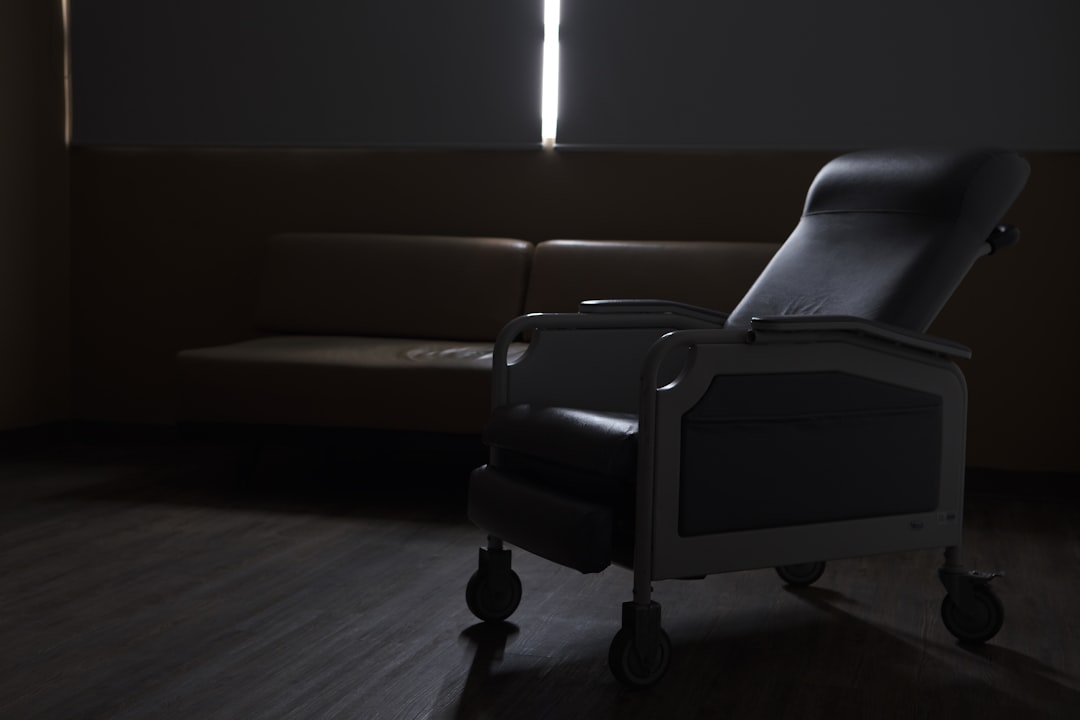
When a German hospital tender specifies upholstered seating, the decisive document is often the requirements specification — the Word requirements document that defines the technical and compliance criteria for every piece of furniture. For overseas buyers sourcing from China, the critical clause in that document is the fire classification. The current benchmark is hospital upholstered furniture fire classification DIN 66084 compliance, which since January 2026 is governed by the revised DIN 66084:2026-01 standard. This article explains what changed, how to read the three fire classes (P-a, P-b, P-c), what evidence to demand from a supplier, and how to build the fire-compliance requirements into your own Word requirements document before you issue an RFQ.
What the 2026 Revision of DIN 66084 Changed for Hospital Seating
The DIN Media record confirms that DIN 66084:2026-01 was published in January 2026, replacing the 2021 edition. The standard now explicitly covers “prefabricated upholstered textile composites” — meaning the entire seat assembly, including a hard substrate like a moulded shell, must be tested as a finished structure, not just the foam or fabric in isolation. For a hospital waiting area or patient room, this changes what a supplier’s “certified” claim actually means. A test report that only covers a foam sample is no longer sufficient; the report must name the complete composite.
For the buyer, the practical implication is direct: your Word requirements document must specify the exact edition (DIN 66084:2026-01) and the exact class (P-a, P-b, or P-c) that applies to each seating zone. The official table of contents lists three classes — P-a, P-b, and P-c — and the test-report requirements. If your tender document simply says “fire-rated,” you leave the interpretation open to the lowest bidder.

P-a vs P-b vs P-c: Which Class Should You Specify?
The three classes differ in the ignition source and the pass criteria. According to the technical breakdown of DIN 66084:2026-01:
- P-a — the highest class. A 100 g paper cushion is ignited on the seat; the flame spread must remain limited and the composite must self-extinguish within 15 minutes. This is the class for escape routes, hospitals, and care facilities.
- P-b — requires resistance to both a smouldering cigarette (per DIN EN 1021-1) and a butane match-flame simulation (per DIN EN 1021-2). Suitable for general public areas where a higher ignition risk exists.
- P-c — only requires cigarette-smoulder resistance. This is the minimum for low-risk areas.
For a hospital project, the default should be P-a for waiting areas, corridors, and patient rooms. A real-world example is Koehl GmbH, a German furniture manufacturer that certifies its lounge seating to P-a, testing the entire finished structure — fabric, padding, fleece, and seat support — for hospitals and care facilities. That is the level of evidence you should expect.
How to Read a Supplier’s Fire Test Report
Not all test reports are equal. When you receive a report from a Chinese manufacturer, verify the following:
- Standard named in the report title and method section — it must say “DIN 66084:2026-01”, not just “DIN 66084” or an older edition.
- Class stated explicitly — the report must list the achieved class (P-a, P-b, or P-c).
- Composite scope — confirm the test covered the assembled composite: fabric, filler, fleece, and supporting substrate. If it only tested foam, it is not valid for your tender.
- Issue date — the report must post-date January 2026. A 2021 report is no longer proof of the current edition.
- Accreditation — the test house must be accredited for this specific standard. Check the scope of accreditation on the lab’s certificate.
In your Word requirements document, include a clause that the supplier must provide a test report from an accredited laboratory that meets all five criteria. This single clause eliminates most non-compliant bids.

Destination Mapping: DIN 66084 vs Other Standards
DIN 66084 is a German national classification standard. It is not a CE-marking requirement and does not imply a universal international obligation. Your obligations depend on the destination market and the intended use of the furniture. For example:
| Destination | Relevant Standard | Typical Requirement |
|---|---|---|
| Germany / EU | DIN 66084:2026-01 | P-a for hospitals and escape routes; P-b for general public areas |
| United Kingdom | BS 5852 / BS 7176 | Source 5 for high-risk areas (hospitals) |
| United States | CAL 133 | Full-scale seating flammability test for public buildings |
| Gulf States | Local Civil Defense rules | Varies by emirate; often based on BS or NFPA |
If you are sourcing for a UK project, do not accept a DIN 66084 report alone. The same applies for the US or Gulf. Your Word requirements document should map the correct standard for each destination and state that the supplier must comply with that specific standard. This is a common pitfall: a manufacturer may present a CAL 133 report as “fire-rated” when your project requires DIN 66084 P-a.
What to Put in Your RFP and Package Spec
Your Word requirements document should include a dedicated section on fire compliance. Here is a practical checklist:
- Standard and edition — specify “DIN 66084:2026-01” and the required class (e.g., P-a).
- Composite scope — state that the test must cover the assembled composite, including the seat shell.
- Report requirements — accredited lab, report in English or German, issue date after January 2026.
- Sample dispatch — require the supplier to send a pre-production sample to an independent lab for verification before mass production.
- Batch testing — for large orders, specify that a random sample from each production batch will be tested at the buyer’s expense.
At ZHOBAI Medical Furniture, we have managed such specifications for projects across Europe and the Middle East. Our engineering team routinely reviews tender documents and aligns factory production with the exact fire-class requirements. We have seen the consequences of vague specifications: a hospital in the Gulf had to replace 200 waiting-area chairs because the supplier delivered CAL 133-compliant seating when the contract required BS 7176 Source 5. That cost was avoidable with a clear requirements document.
Cost, MOQ, and Lead-Time Implications
Higher fire classes generally increase cost and may extend lead times. P-a requires more expensive materials — typically a fire-retardant barrier fabric and a higher-grade foam. Full-assembly testing adds to the QC cycle. As a planning example, for a 500-chair order, expect the following:
- Cost increase — 10-15% over P-c for P-a, depending on the base fabric and foam.
- MOQ — most Chinese factories require a minimum order of 50-100 pieces for custom fire-rated construction.
- Lead time — add 2-3 weeks for material procurement and 1-2 weeks for third-party testing, compared to standard production.
These are typical planning figures, not fixed quotes. Your actual numbers depend on the specific design and the factory’s supply chain. The key is to include these contingencies in your project timeline from the start.
6-Point Fire-Compliance Verification Before PO
Before you issue a purchase order, verify the following six points. This is the audit we recommend to every buyer:
- 1. Standard and edition — the report names DIN 66084:2026-01.
- 2. Class — the report states P-a, P-b, or P-c as required.
- 3. Composite scope — the test covered the assembled composite, not just foam.
- 4. Accreditation — the lab’s accreditation scope includes this standard.
- 5. Issue date — the report is dated after January 2026.
- 6. Sample verification — you have a plan to send a pre-production sample to an independent lab.
If any of these points fail, the supplier is not compliant. Do not accept a verbal assurance or a photocopy of an old report. The cost of a failed fire test on site — replacement, delay, and potential liability — far exceeds the cost of verification upfront.
For a deeper look at how we structure factory audits and QC for hospital furniture, see our guide on hospital furniture factory audit standards. And for the broader procurement process, our hospital FFE procurement blueprint covers the full workflow from specification to installation.
In summary, the Word requirements document is your first line of defense against fire-compliance failure. Specify DIN 66084:2026-01 and the exact class, demand the correct test evidence, and verify with third-party samples. That is the difference between a project that passes inspection and one that ends in replacement.
Practical Steps for Overseas Buyers to Verify DIN 66084 Compliance
When you are an overseas buyer sourcing hospital upholstered furniture from China, the fire classification requirement is not just a technical detail—it is a contractual obligation. To ensure that your project meets the German standard, you must take proactive steps throughout the procurement process. Below are practical actions you can implement, from drafting your RFQ to final handover.
RFQ Questions to Ask Your Supplier
Before you send out a request for quotation (RFQ), prepare a list of specific questions that will help you assess the supplier’s capability to meet DIN 66084:2026-01. These questions should be included in your RFQ document to avoid ambiguity.
- Can you provide a test report for the complete upholstered composite, including the seat shell, that is dated after January 2026?
- Which fire class (P-a, P-b, or P-c) does your standard hospital seating model achieve, and can you guarantee that class for our order?
- Is your test laboratory accredited for DIN 66084:2026-01? Please provide a copy of the accreditation scope.
- What is your process for ensuring batch-to-batch consistency in fire performance? Do you conduct routine testing on production samples?
- Can you provide a sample of the fire test report in English or German for our review before we place an order?
Document Checks: What to Look For in the Supplier’s Documentation
When you receive the supplier’s documentation, do not just glance at the certificate. Perform a thorough check to ensure that every detail aligns with your requirements.
- Verify that the standard number and edition are explicitly stated as DIN 66084:2026-01, not just DIN 66084.
- Check that the test report lists the achieved class (P-a, P-b, or P-c) and that it matches your specification.
- Confirm that the test report covers the entire composite, including the fabric, padding, fleece, and any substrate. If the report only mentions foam, it is not sufficient.
- Ensure the report is dated after January 2026, as earlier reports are not valid for the current edition.
- Look for the accreditation body’s mark and verify that the lab’s scope includes DIN 66084:2026-01.
Approval Milestones: Integrating Fire Compliance into Your Project Plan
To avoid surprises, integrate fire compliance checks into your project milestones. This ensures that you catch any issues early, before mass production begins.
- Pre-production sample approval: Require the supplier to send a pre-production sample to an independent, accredited laboratory for verification. This sample must be identical to the final product in materials and construction.
- First article inspection: During the first article inspection (FAI), verify that the materials used match those in the approved sample. Check for any substitutions that could affect fire performance.
- Batch testing: For large orders, specify that a random sample from each production batch will be tested at the buyer’s expense. This is especially important if the supplier uses different material lots.
- Final inspection before shipment: Before the goods are shipped, conduct a final inspection to ensure that the furniture is correctly labeled with the fire class and that all documentation is in order.
Inspection Planning: How to Conduct Effective Inspections
Inspections are your opportunity to catch non-compliance before it becomes a costly problem. Plan your inspections carefully.
- Hire a third-party inspection agency that is familiar with DIN 66084 and has experience with upholstered furniture. They should check not only the fire properties but also the overall quality and workmanship.
- During the inspection, request to see the material certificates for the fabric, foam, and any fire-retardant barriers. Verify that these materials are the same as those tested.
- Ask the inspector to take photographs of the production process, especially the assembly of the composite layers, to ensure that the construction matches the tested configuration.
- If possible, have the inspector witness the cutting of samples for fire testing to ensure they are representative of the production batch.
Packaging Review: Protecting Fire-Rated Materials During Transit
Fire-rated materials can be sensitive to moisture and contamination. Proper packaging is essential to maintain their performance.
- Require that the furniture be wrapped in a protective, breathable material to prevent moisture buildup, which could degrade the fire-retardant properties.
- Ensure that the packaging is clearly marked with the fire class and any handling instructions. This helps avoid confusion during installation.
- Ask the supplier to include a packing list that details the materials used in each piece, so you can verify that the correct fire-rated components are included.
- Consider requiring that the furniture be shipped in a way that minimizes the risk of damage, such as using sturdy cartons or pallets with adequate cushioning.
Handover Responsibilities: Ensuring Compliance at Installation
The handover process is your final chance to ensure that the furniture meets the fire classification requirements. Define clear responsibilities for both you and the supplier.
- Before installation, have a qualified person review the test reports and certificates against the delivered goods. This can be done by your project manager or a third-party consultant.
- During installation, ensure that the furniture is not altered in any way that could affect its fire performance. For example, do not add non-fire-rated cushions or covers.
- After installation, conduct a visual inspection to confirm that the furniture is correctly labeled and that no damage has occurred during transit that might compromise fire safety.
- Keep all documentation, including test reports and certificates, in a safe place for future reference. This is important for audits and for demonstrating compliance to authorities.
Communicating with Your Supplier: Clear and Documented
Effective communication with your supplier is key to ensuring compliance. Make sure that all requirements are documented and agreed upon in writing.
- Send your supplier a detailed specification sheet that includes the exact standard, edition, and fire class required. This should be part of the contract.
- Request that the supplier confirm in writing that they can meet the fire classification and provide the necessary documentation.
- Establish a communication channel for any questions or concerns about fire compliance. This could be a dedicated email or a regular conference call.
- If there are any changes to the materials or design, require the supplier to notify you immediately and provide updated test reports.
Common Pitfalls and How to Avoid Them
Overseas buyers often encounter similar issues when sourcing fire-rated furniture. Being aware of these pitfalls can save you time and money.
- Accepting a test report that covers only the foam: This is a common mistake. Always insist on a report for the complete composite.
- Relying on a verbal assurance of compliance: Always ask for written evidence, such as a test report or certificate.
- Not specifying the edition of the standard: If you just say “DIN 66084,” the supplier may provide an outdated report. Always specify the edition.
- Ignoring the need for batch testing: Even if the initial sample passes, production variations can occur. Batch testing is essential for large orders.
- Forgetting to check the accreditation of the lab: A report from a non-accredited lab is not valid. Always verify the lab’s credentials.
Integrating Fire Compliance into Your Quality Assurance Plan
Your quality assurance plan should include specific steps for fire compliance, not just general quality checks. This ensures that fire safety is a priority throughout the production process.
- Include fire compliance as a key performance indicator (KPI) in your supplier scorecard. This encourages the supplier to maintain high standards.
- Schedule regular audits of the supplier’s production line to ensure that they are using the correct materials and processes.
- Require the supplier to maintain a traceability system for all materials used in fire-rated furniture. This helps in case of a recall or investigation.
- Consider hiring a local agent in Germany to help you navigate the regulatory environment and verify compliance on your behalf.
Final Thoughts: Making Fire Compliance a Priority
Fire classification is not just a checkbox on a list—it is a critical safety feature that protects patients, staff, and visitors. By taking these practical steps, you can ensure that your hospital upholstered furniture meets the highest standards of fire safety. Remember, the cost of verification is far less than the cost of failure. Invest the time and resources upfront to avoid costly delays and potential liability down the line.
ZHOBAI Medical Furniture
Ready to Apply These Principles to Your Project?
Our engineering team responds to all project briefs within 24 hours. Share your FF&E scope — room count, property type, target timeline, and budget range — and we’ll provide a factory-direct assessment and indicative pricing within one business day.