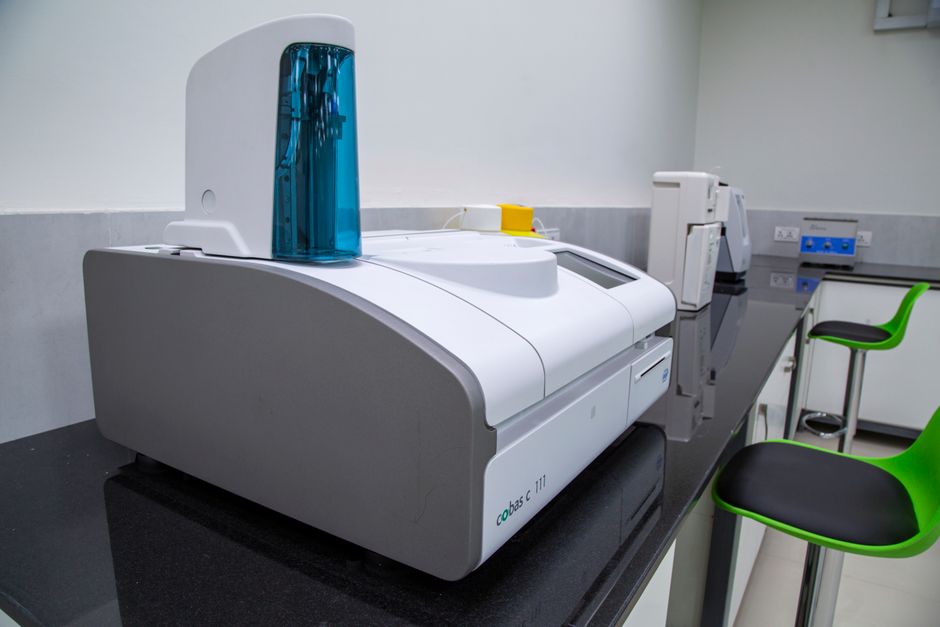
A polished showroom demonstrates what a supplier can prepare for a visit. A factory audit must determine what the production system can repeat across hundreds of units. The difference is found in drawing revisions, material batch records, machine settings, first-article inspection, nonconforming-product control and the ability to trace a finished cabinet back through every critical process. This article provides a practical framework for hospital furniture factory audit standards, focusing on evidence-based verification rather than superficial metrics.
Understanding the Audit Scope: Beyond the Showroom
Most procurement teams start with a tour of the showroom and a review of certificates. Both are useful, but neither proves the ability to deliver consistent quality across a 500-bed project. The real audit begins when you move into the production area, the warehouse, the laboratory, and the document control office. Your goal is to verify that every critical requirement has a defined source, a measurement method, a sampling plan, recorded evidence, batch traceability, and a clear process for isolating and closing out nonconformities.
Learn more about how to choose a bespoke hospital furniture manufacturer.
For African and Middle Eastern projects, additional factors come into play: remote auditing capabilities, cross-border replacement lead times, climate exposure during transit, on-site installation resources, and evidence traceability for customs and regulatory purposes. These regional characteristics should shape your audit agenda, but they do not change the fundamental principles.
Four Production Modules: What to Inspect in the Workshop
A thorough audit of hospital furniture factory audit standards requires examining four core production modules. Each module has specific evidence requirements that go beyond equipment brand names.
CNC and Panel Processing
Do not be impressed by a German five-axis CNC machine. The brand, country of origin, and number of axes are not compliance requirements. Instead, verify the machine’s suitability for your materials, precision, size range, and capacity. Ask to see tool management records, program versions, first-piece measurement results, and maintenance logs. Randomly select a part from a current order and re-measure critical hole positions against the approved drawing. This tests actual capability, not marketing claims.
For example, a typical nurse station counter may require a hole tolerance of ±0.5 mm for MEP penetrations, but a general appearance dimension might allow ±1.5 mm. The audit should confirm that the factory distinguishes between critical and non-critical characteristics and applies appropriate control levels.
Edge-Banding: PUR vs. EVA
PUR (polyurethane reactive) hot-melt adhesive can provide higher resistance to moisture and heat than many conventional EVA systems, but the adhesive name alone is not evidence of a compliant edge. Buyers should verify the exact product, storage life, application window, substrate preparation, machine settings, bond-line consistency, and performance after exposure to the facility’s cleaning chemicals.
During the audit, check the adhesive drum labels for batch numbers and expiry dates. Review the application temperature, feed speed, and glue quantity settings on the edge-banding machine. Ask for records of peel tests or humidity resistance tests. A common mistake is to assume that PUR edge banding for hospital furniture is automatically waterproof or antibacterial. It is not. The performance depends on the entire process chain.
Metal Fabrication and Surface Treatment
For metal components, verify the steel grade and sheet thickness. Inspect welding procedures and surface preparation. Ask for coating batch records, film thickness measurements, curing logs, and adhesion test reports. If the supplier claims antimicrobial powder coating, they must provide specific test reports, such as ISO 22196, and state the scope of the claim. Do not accept verbal assurances.
For salt spray testing, the ASTM B117 standard defines the test apparatus and procedure, but it does not specify exposure duration or pass/fail criteria. A supplier that says “we passed salt spray” must provide the duration, substrate, coating system, scribe method, and acceptance results.
Sample, Pre-Assembly, and Packaging
The sample room is not just a showroom. It should contain first articles, golden samples, and records of deviations from production. Verify that the sample’s capability is replicated in mass production. Check pre-assembly procedures: are critical or first articles fully assembled? Are standard modules sampled according to an approved plan? For packaging, review the packing BOM, room numbering, and container loading records. A missing component can delay installation for weeks, especially on overseas projects.
QA/QC Systems and Batch Traceability
An ISO 9001 certificate indicates that a quality management system has been assessed within a defined scope. It does not prove that every product is defect-free or clinically compliant. Auditors should confirm the certified scope and then test whether the system is operating through real orders, records, and corrective actions. This is the essence of healthcare furniture quality control inspection.
The following table outlines the key control points and the evidence you must see during an audit:
| Control Point | Evidence Required |
|---|---|
| IQC (Incoming Inspection) | Material specifications, batch numbers, supplier COA, and inspection records. Nonconforming materials must be quarantined. |
| FAI (First Article Inspection) | First-piece inspection for new products, major changes, or line changes. Verify dimensions, holes, hardware, surface, and assembly. |
| IPQC (In-Process Control) | Patrol inspections at cutting, edge-banding, drilling, welding, painting, and assembly. Reaction plans for deviations. |
| OQC / Final Inspection | Functional, appearance, dimensional, accessory, label, packaging, and documentation checks based on product risk. |
| Nonconforming Product | Identification, segregation, review, rework/scrap/concession approval, and corrective action. |
| Traceability | From finished cabinet back to production order, material batches, operator/inspection records, hardware, and test reports. |
| Change Control | Evaluation, approval, verification, and sample update for any change in material, adhesive, hardware, process, supplier, or drawing. |
For iso certified medical cabinetry manufacturing, the certificate scope must be verified. If the certificate covers only certain product lines, you cannot assume all cabinetry falls under it. Similarly, ISO 13485 is for medical devices; a cabinet may not be a medical device. Do not let a certificate substitute for product-level testing.
Printable Factory Audit CheckSheet
To standardize your evaluation, use a checklist that covers all critical areas. The following is a condensed version suitable for both on-site and remote audits. This factory audit checklist for medical suppliers should be adapted to your project specifics.
| Module | Evidence to Check | Verification Action | Result |
|---|---|---|---|
| Management System | ISO certificates, scope, internal audits, management reviews, corrective actions. | Verify company name, address, scope, certification body. Randomly trace one CAPA. | Pass / Corrective Action |
| Drawings & Engineering | Approved drawings, BOM, revision control, ECN, FAI. | Trace a finished product back to current drawing and changes. | Pass / Corrective Action |
| Raw Materials | Supplier approval, IQC, batch numbers, COA. | Scan batch number and trace to incoming inspection and supplier report. | Pass / Corrective Action |
| CNC Precision | Machine capability, calibration, first-piece and patrol records. | Measure critical hole positions randomly; compare to project tolerance. | Pass / Corrective Action |
| PUR Edge-Banding | Adhesive TDS, batch number, process parameters, test records. | View actual production parameters and take samples for inspection/testing. | Pass / Corrective Action |
| Coating & Metal | Pretreatment, film thickness, curing, adhesion (ASTM D3359), salt spray (ASTM B117) reports. | Randomly check coating batch and test conditions. | Pass / Corrective Action |
| Hardware & Structure | Rated loads, cycle tests, supplier documentation. | Perform functional and load spot checks per approved specifications; do not invent a universal 35 kg drawer limit. | Pass / Corrective Action |
| Process Quality Control | FAI/IPQC/OQC, measuring tools, defect segregation. | Find actual inspection points and nonconforming area on the line. | Pass / Corrective Action |
| Pre-Assembly & Packaging | Golden sample, assembly checks, packing BOM, labels. | Pick one set and verify component completeness, room number, and packaging protection. | Pass / Corrective Action |
| Traceability | Order, batch, inspection, shipping, complaint records. | Randomly select a delivered order and complete end-to-end trace. | Pass / Corrective Action |
For remote audits, use live video with random access to production areas and documents. Do not accept pre-recorded videos. The ISO/IEC TS 17012 standard provides guidance on remote auditing methods, but it also notes limitations. Some observations, such as tactile checks or precise measurements, may require on-site presence.

Sampling Strategies and the Cost of Defect Leakage
ISO 2859-1:2026 defines acceptance sampling by attributes. It is a useful tool, but it is not a license to allow defects. The AQL is not a target for production; it is a threshold for acceptance. You should stratify your inspection based on risk:
- Critical MEP holes, product identity, quantity, and severe safety characteristics: consider 100% inspection or automated error-proofing.
- Repeat appearance, general dimensions, and packaging items: use sampling based on batch size, inspection level, and AQL.
- New products, process changes, supplier changes, or consecutive nonconformities: increase inspection level or revert to tightened inspection.
After production stabilizes, adjust the sampling plan based on process capability, complaints, and trend data. Do not mechanically apply the same AQL forever.
Understanding the cost of defect leakage is essential for justifying audit efforts. The formula is:
Cost of defect leakage = Defective quantity × (Replacement + Site labor + Expedited logistics + Reinspection) + Delay overhead + Warranty/claim administration
Consider an illustrative scenario: 500 sets of furniture, an 8% defect rate, $800 per set for replacement, $300 per set for site labor, and $500 per set for expedited logistics. The scenario loss would be $64,000, excluding batch isolation and re-inspection costs. This is an example, not an industry average. Use your project’s historical defect rates and actual costs to build a realistic model.
The return on investment for an audit is not simply the audit cost versus the potential loss. It also includes the probability of finding issues, the effectiveness of corrective actions, and the opportunity cost of switching suppliers or delaying the project.

ZHOBAI’s Evidence-Based Approach
At ZHOBAI Medical Furniture, we apply these principles to our own operations. Our factory audit standards are designed to provide clients with transparent evidence. We offer live video audits where you can randomly select production lines, review documents, and witness measurements in real time. Our QA/QC team maintains records for every batch, from incoming materials to final packing. We do not claim “medical-grade” based on a certificate; we provide test reports and process data that support our claims.
For example, our PUR edge-banding line uses specific adhesive grades with documented TDS and process parameters. We can share batch records and test results for peel strength and humidity resistance. Our metal finishing follows strict pretreatment and coating protocols, with film thickness and adhesion tests per ASTM D3359. We are transparent about what we inspect 100% and what we sample, and we adjust our plans based on risk.
We encourage you to review our factory page and certifications to understand our capabilities. When you are ready to conduct a thorough audit, we will provide an agenda and evidence package tailored to your project’s product categories, required standards, and confidentiality conditions.
Red Flags and Common Pitfalls
During your audit, watch for these red flags:
- Unsubstantiated claims: “70% of medical-grade promises fail in the workshop” is a statistic without a source. Replace it with evidence-based evaluation.
- Overemphasis on equipment brand: A German CNC machine does not guarantee precision. Check actual parts.
- Vague tolerances: “All holes within 0.5 mm” is meaningless without a drawing reference. Tolerances must come from approved drawings.
- PUR as a magic solution: PUR adhesive is not automatically antibacterial or waterproof. Verify the specific product and process.
- ISO 13485 as a blanket certification: The certificate scope must cover the actual product. A cabinet may not be a medical device.
- 100% inspection claims: Clarify whether they mean 100% of critical characteristics or 100% of all items. The latter is rare and costly.
- Pre-assembly claims: “All modules are pre-assembled” may be unnecessary. Key and high-risk modules should be fully assembled, while standard modules can be sampled.
These pitfalls are common in the industry. A rigorous audit will uncover them.

Conclusion
The true factory audit is not about proving that equipment looks advanced. It is about proving that every critical requirement has a source, a process control, an inspection record, a reaction plan, and traceability from mass production back to materials and drawings. By applying the hospital furniture factory audit standards outlined here, you can select a supplier who can consistently deliver clinical furniture that meets your specifications, even across borders and climates. A supplier who can provide third-party QC reports at mid-production and has shipped to your destination port before is worth more than a showroom full of certificates.
ZHOBAI Medical Furniture
Ready to Apply These Principles to Your Project?
Our engineering team responds to all project briefs within 24 hours. Share your FF&E scope — room count, property type, target timeline, and budget range — and we’ll provide a factory-direct assessment and indicative pricing within one business day.