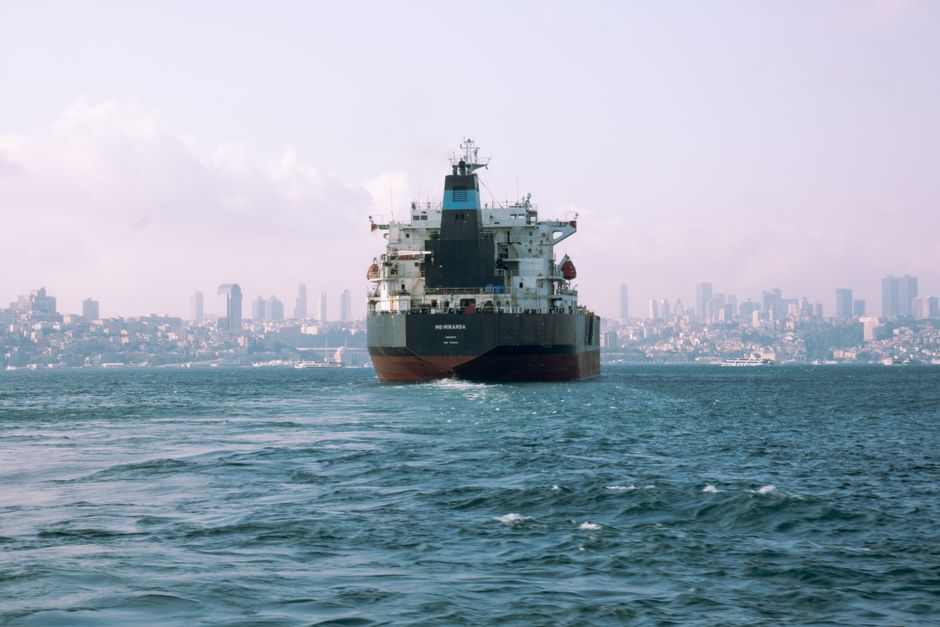
As of July 2026, the Strait of Hormuz supply chain disruption is not a hypothetical risk—it is a live variable that directly affects shipping schedules, insurance premiums, and port decisions. For hospital projects, the most dangerous consequence is not a higher freight quote but the late arrival of a critical nurse station, laboratory cabinet, or fixed clinical storage package that sits on the installation and commissioning path. This playbook translates that geopolitical risk into manageable variables: shipping windows, alternative routes, material substitution, production visibility, and contract accountability. No supplier can eliminate external risk, but a validated source with consolidated production, unified BOM, and contingency routing can reduce the probability that a missing furniture component delays clinical compliance or opening day.
Clinical Compliance and the Bucket Effect
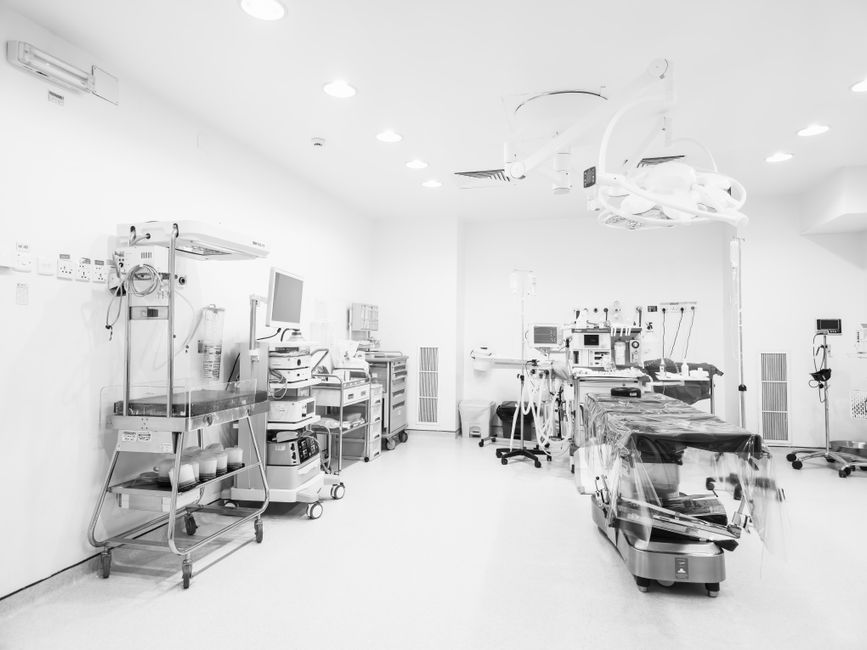
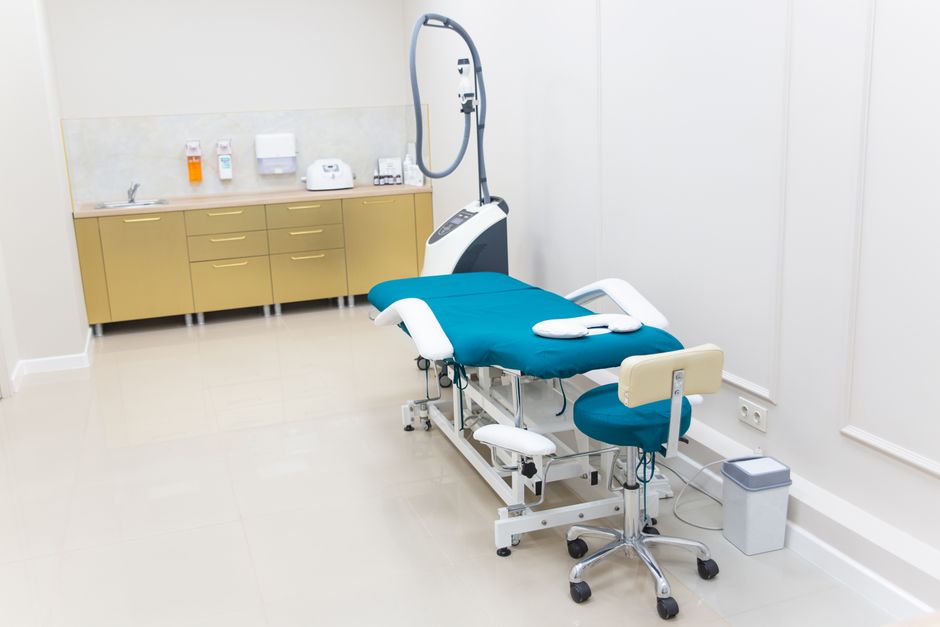
Hospital furniture is not classified as a medical device, but fixed cabinetry, nurse stations, laboratory worktops, pharmacy modules, and hand-washing stations interface with plumbing, gas, equipment clearances, clean paths, and staff circulation. The absence of a single custom-built component can prevent a department from completing final installation, commissioning, or regulatory inspection. The Strait of Hormuz supply chain disruption turns this interface risk into a critical path problem: an ordinary activity chair delay rarely freezes a hospital, but a group of custom cabinets tied to piping and power lines often does.
Key Compliance Checkpoints Affected by Furniture Delays
- Cleanable surfaces: Seamless edge banding, non-porous finishes, and resistance to disinfectants like 70% isopropanol or 500 ppm chlorine.
- No-catch corners: Gaps below 2 mm where bacteria can accumulate; corners must be radiused.
- Fixed anchorage: Seismic and stability requirements for cabinets above 900 mm in height.
- Equipment clearances: Minimum 1000 mm access in front of imaging equipment; 900 mm clearance for patient beds.
- Accessible routes: Corridor widths and turning circles for wheelchairs and stretchers.
A disruption in the Strait of Hormuz supply chain can delay the arrival of these custom-fabricated items by weeks. With multiple suppliers, the number of interfaces multiplies: each vendor has its own drawing version, material substitution policy, shipping batch, and installation team. The result is a cascade of coordination errors that extend beyond the port and into the construction site. In one 2025 project in Southeast Asia, a missing pharmacy cabinet held up department validation for 11 days because the cabinet housed the controlled substance log and CCTV wiring. That delay cost the owner approximately $2,300 per day in standby labor and borrowed space.
To mitigate this, project teams should identify which furniture items lie on the critical path before placing orders. A simple room-by-room audit can flag the top 20% of components that drive 80% of the risk. Those items should be produced earliest, shipped with priority container allocation, and backed by material substitution approvals that do not require re-engineering.
Turnkey Model: Eight Control Points for Risk Reduction
A turnkey hospital furniture solutions approach does not make geopolitical risk disappear. Its advantage is operational: one controlled bill of materials, one production schedule, one packing strategy, one logistics plan, and one accountable recovery process. This reduces the number of interfaces at which a critical decision can be delayed or lost. In the context of the Strait of Hormuz supply chain disruption, a single point of contact becomes the node for route decisions, container consolidation, and contingency activation.

The Eight Control Points
| Control Point | Description | Risk Mitigated |
|---|---|---|
| 1. Baseline freeze | Room list, BOQ, BOM, interface diagram, and responsibility matrix locked before production | Scope creep and mid-order changes |
| 2. Shop drawings | Based on site re-measurements and MEP conditions, not concept renders | Field-fit errors and rework |
| 3. Material substitution list | Pre-approved A/B equivalent materials; no last-minute downgrades | Quality loss during shortages |
| 4. Critical path classification | Nurse stations, lab cabinets, pharmacy, fixed storage prioritized over loose furniture | Delays in department commissioning |
| 5. Production visibility | Dates and evidence for material intake, first article, batch, inspection, packing, container loading | Late discovery of problems |
| 6. Container consolidation | Packed by department and installation sequence; minimal loose parcels | Site re-sorting and missing items |
| 7. Dual routing plan | Primary route, backup port, switch trigger, insurance and cost sharing written into plan | Route closure paralysis |
| 8. Recovery mechanism | 24/48-hour impact assessment and recovery proposal after any disruption | Decision delays |
The healthcare supply chain risk management framework above is not theoretical. It is a checklist that should be part of every RFP. When evaluating suppliers, ask for evidence of these controls in at least one recent project of similar scale. A supplier that can demonstrate control points 4, 6, and 7 is far better positioned to handle a Strait of Hormuz supply chain disruption than one that claims to be a “one-stop shop” without process documentation.
Alternative Shipping Routes for Furniture
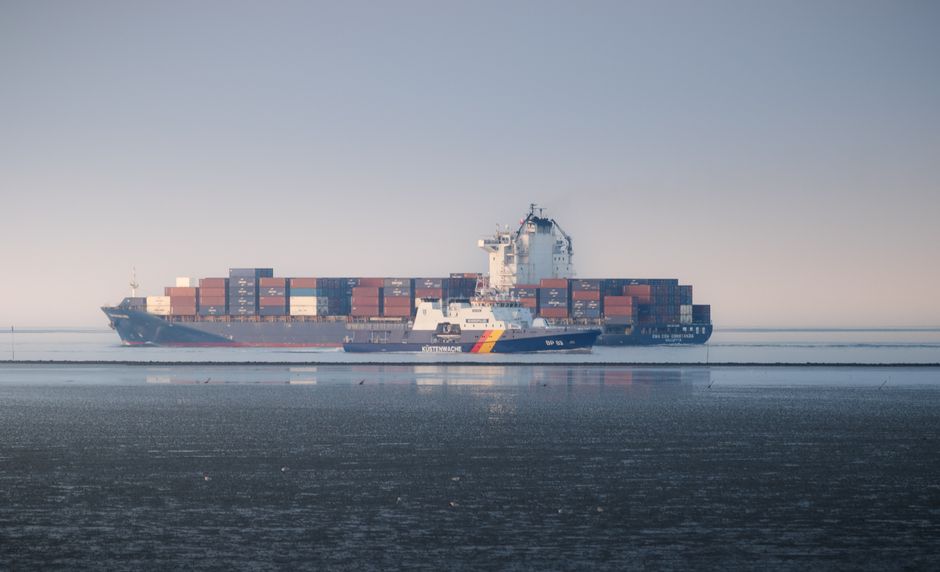
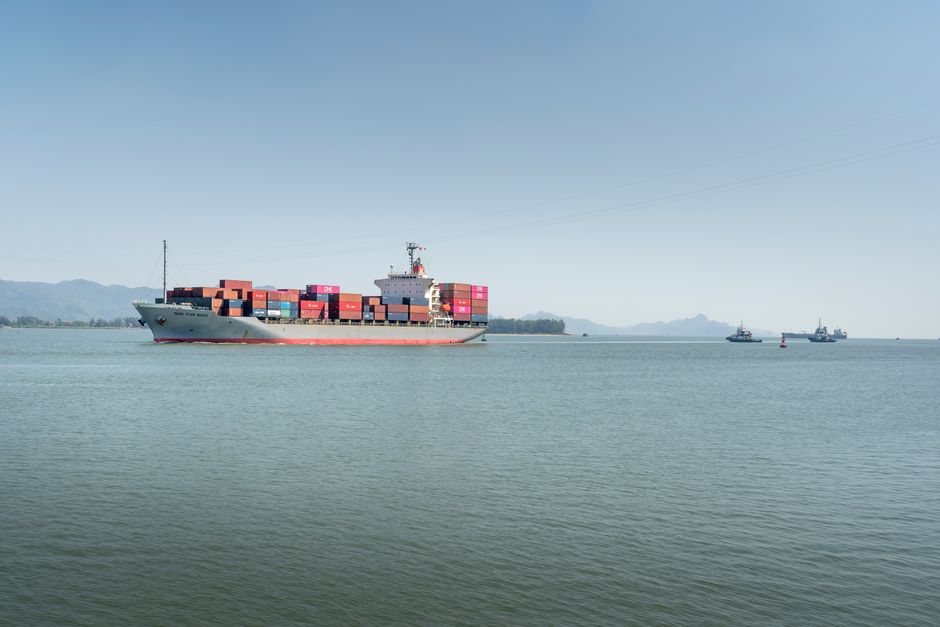
Furniture is a volume-dense, low-value-per-CBM cargo. Route selection must weigh CBM, weight, destination, transshipment count, damage risk, customs complexity, and installation window. The Strait of Hormuz supply chain disruption forces project teams to evaluate alternatives that are often more expensive or restricted. Below are the viable alternatives for healthcare furniture, with their trade-offs.
Route Comparison
| Route | Advantages | Limitations | Best For |
|---|---|---|---|
| Round Africa (Cape of Good Hope) | Avoids Red Sea and Hormuz; full container capacity | 8–12 additional days; higher fuel and charter rates | European and Mediterranean destined full-container shipments |
| China-Europe Railway (Xi’an to Duisburg, etc.) | 14–18 days; regular schedules | Higher cost per CBM; limited to 30–40 ft containers; gauge and weight restrictions | Time-critical cabinetry or hardware for Europe-bound projects |
| Middle Corridor (Trans-Caspian) | Via Kazakhstan, Caspian, Caucasus to Europe; 18–23 days possible | Multiple border crossings and transshipments; historically 30–45 days | High-value, low-volume emergency batches for EU projects |
| Indian Ocean + Gulf East Coast (Jebel Ali via Oman) | Avoids Strait of Hormuz crossing; access to GCC via road | Requires land logistics from Oman or UAE east coast; security checks | GCC projects with flexible inland clearance |
| Air freight / Sea-Air | Fastest (3–7 days) | Extremely high cost; not feasible for large furniture | Small components, specialized hardware, critical spare parts |
The alternative shipping routes for furniture must be evaluated on a per-shipment basis. The Strait of Hormuz supply chain disruption does not automatically shut all lanes; it raises the cost and complexity of each option. For a 40-foot container of ward cabinets, the Cape route may add $1,500 to $2,500 in fuel and time costs. Rail for the same volume might be $3,000–$5,000 more expensive. Air is only viable for items under 500 kg. The key is to have a portfolio strategy: designate which items go by ocean, which by rail, and which by air, and set triggers for switching. For example, if the Strait of Hormuz traffic volume drops below a threshold (monitored through Lloyd’s list or satellite data), automatically re-route the next booking via the backup plan. This pre-decision avoids the panic rush that drives spot rates up by 200–300%.
CFO Risk-Adjusted Cost Model
A responsible financial model for healthcare furniture procurement in 2026 must go beyond FOB or CIF quotes. The Strait of Hormuz supply chain disruption introduces probability-weighted costs that can add 10–20% to the realized landed cost. Below is a comparative scenario for a typical $1 million furniture package shipped from China to a European hospital.
| Cost Item | Fragmented Sourcing (USD) | Integrated Turnkey (USD) | Note |
|---|---|---|---|
| Product & packaging | $1,000,000 | $1,000,000 | Same base product |
| Basic ocean freight | $120,000 | $95,000 | Consolidated containers vs. multiple LCL shipments |
| War risk / fuel surcharges / congestion | $70,000 | $40,000 | Integrated buyer absorbs less surcharge volatility via annual contract |
| Multiple batch storage, re-dispatch & site waiting | $85,000 | $30,000 | Fewer shipments = lower warehousing and idle labor |
| Expected delay cost (probability-weighted) | $150,000 | $65,000 | Assumes 25% probability of 30-day delay at $5,000/day for fragmented; 10% probability for integrated |
| Risk-adjusted total | $1,425,000 | $1,230,000 | Difference: $195,000 (13.7%) |
This model assumes a specific destination and Incoterm (CIF). It is an illustration, not a guarantee. However, it demonstrates that reducing hospital construction budget requires a process that addresses the right levers: consolidating orders, pre-approving material substitutions, and maintaining a contingency fund for route upgrades. The Strait of Hormuz supply chain disruption makes these levers more valuable because the probability of a disruptive event has increased. Project teams should run their own numbers using their specific delay cost per day, financing rates, and opening penalties. A 13.7% differential on a $1 million package is $137,000—enough to fund an entire ward’s loose equipment.
Supplier Audit: 12 Questions for the Procurement Team
To convert risk awareness into procurement action, every hospital or EPC should audit potential furniture suppliers against these 12 questions. The answers will separate firms that have real operational capability from those that rely on marketing language.
- Which furniture items lie on your project’s critical path for installation or commissioning?
- Can you provide a department-level BOM with CBM, packing list, and container loading sequence?
- Who approves material substitutions? What prevents downgrades when a shortage occurs?
- What is the validity of your quotation? How are war risk, fuel surcharge, congestion fee, and currency fluctuation adjusted?
- What are your primary route, backup port, and switch conditions for this destination?
- Which items are suitable for rail, sea-air, or air relative to this project’s timeline and budget?
- Who handles customs clearance, destination documentation, demurrage, and exception handling?
- What verifiable production milestones do you track? Can we inspect at material intake, first article, and before loading?
- Is the container packing sequence aligned with the site installation schedule?
- After a voyage cancellation, how quickly do you provide an impact assessment and recovery plan?
- Do you support third-party inspection, mock-up room, and container loading supervision?
- Can you share delivery evidence from similar countries, ports, or project types?
A supplier that can answer all 12 with documented evidence—e.g., past project photos, shop drawings, milestone reports, route contingency plans—is operationally prepared for the Strait of Hormuz supply chain disruption. ZHOBAI Medical Furniture, with 15+ years of experience, a 10,000+ sqm manufacturing base, CE and ISO certifications, and a track record of projects in 30+ countries, routinely provides this documentation. Our engineering team works from a single BOM, packs by department, and maintains dual routing plans for high-risk corridors. We have experience shipping to ports in Europe, Asia, Africa, and the Americas, and we can reference projects such as the Jiangsu Provincial People’s Hospital (500-bed) or the Xi’an International Medical Center where consolidated production and containerization avoided delays that affected the broader supply chain.
When evaluating a medical grade furniture manufacturer China, look beyond brochures. Request the BOM and packing list from a recent project of similar size. Ask how they handled the 2024–2025 Red Sea crisis—that is the closest analog to today’s disruption. The Strait of Hormuz supply chain disruption is a stress test for supplier resilience. Those who passed the Red Sea stress test are better equipped now.
Frequently Asked Questions
How does the Strait of Hormuz supply chain disruption affect lead times for hospital furniture?
Lead times extend by 10–20 days depending on route, vessel availability, and port congestion. Surcharges for war risk and fuel add 5–15% to freight costs. The larger risk is schedule uncertainty, which can delay installation sequencing and clinical commissioning.
What are the best alternative shipping routes for furniture from China to Europe?
The Round Africa route offers capacity but adds time. Rail via Kazakhstan and the Middle Corridor can be faster for high-value, low-volume items. Sea-air through Dubai or Singapore is an emergency option for critical components. Each option must be evaluated against CBM, destination, and project timeline.
Can turnkey hospital furniture solutions really reduce risk?
Turnkey models cannot eliminate external risk, but they consolidate responsibility, reduce interface errors, and provide a single recovery point. Pre-approved material substitutions and consolidated shipments lower the probability of missing critical items. The key is to verify that the supplier has documented process controls, not just a sales pitch.
What should a hospital CFO include in a risk-adjusted cost model?
The model should include product cost, packing, inland transport, ocean freight, insurance and surcharges, port and storage fees, site handling, and a probability-weighted delay cost. Use your own delay cost per day (e.g., standby labor, equipment rental, penalty clauses) to compute the expected impact. A 10–15% risk premium is reasonable for shipments transiting high-risk chokepoints.
The Strait of Hormuz supply chain disruption is not a reason to panic—it is a reason to plan. By applying a structured risk framework, verifying supplier capabilities, and building financial models that account for uncertainty, project teams can protect their opening timeline and budget. The difference between a delayed project and an on-time opening often comes down to these three actions: identifying critical-path components, consolidating procurement under a single accountable partner, and pre-authorizing route and material contingencies. That is the playbook.
ZHOBAI Medical Furniture
Ready to Apply These Principles to Your Project?
Our engineering team responds to all project briefs within 24 hours. Share your FF&E scope — room count, property type, target timeline, and budget range — and we’ll provide a factory-direct assessment and indicative pricing within one business day.