The shift from advisory guidelines to enforceable code language in the 2026 FGI Hospital Code is forcing a fundamental re-evaluation of furniture specifications for medical psychiatry units. For the first time, the FGI 2026 code hospital furniture medical psychiatry requirements are codified as mandatory, with direct implications for ligature resistance, calming room design, and risk assessment. This article breaks down what the new code means for furniture selection, procurement, and manufacturing.
From Guidelines to Code: What Changed in 2026
The Facility Guidelines Institute (FGI) has renamed its 2026 document the FGI Code for Planning and Design of Hospitals, replacing the former ‘Guidelines.’ This is not a cosmetic change. The new document uses enforceable mandatory language, while advisory content and best practices have been moved to separate companion handbooks. For furniture suppliers, this means interpretive appendix text is no longer a defense. Authorities having jurisdiction (AHJs) now have clear, enforceable language to cite during plan review and inspection.
Learn more about our article on hospital FFE procurement blueprint.
Learn more about our guide on antimicrobial medical casework compliance.
Forty-two states have adopted some edition of the FGI codes as a minimum criterion for healthcare facility design. The shift to code status means that non-compliance is not a matter of best practice—it is a matter of code violation. For manufacturers, this elevates the importance of documented compliance. Buyers will increasingly cite specific code sections in RFPs, and suppliers must be able to map each product to those sections.
Medical Psychiatry Units: New Furniture Requirements
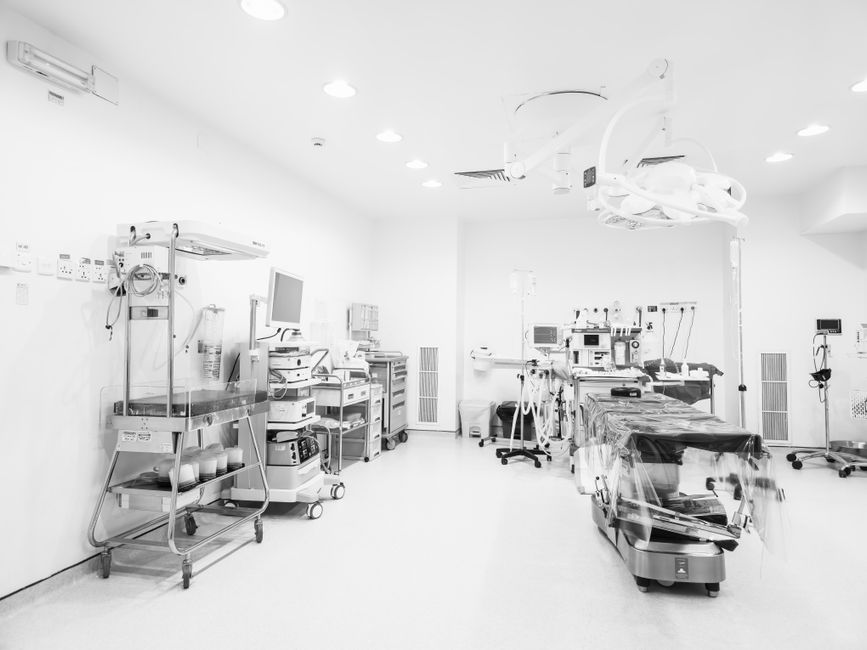
The most consequential furniture-related development is the introduction of minimum requirements for Medical Psychiatry Patient Care Units (MPUs). These units serve patients who need both behavioral health support and active medical treatment—a population that historically fell through the gap between medical units unequipped for behavioral safety and behavioral health units unable to provide acute medical care.
Key furniture-relevant provisions include:
- Ligature-resistant products appropriate for medically complex patients. This goes beyond standard anti-ligature hardware. It requires casework, seating, and beds that eliminate anchor points without compromising medical functionality.
- Calming rooms designed to support sensory regulation. Furniture in these spaces must facilitate de-escalation, not containment. Weighted blankets, sensory-friendly seating, and adjustable lighting are now part of the furniture package.
- Group therapy and social spaces with group dining areas, visitor rooms, and consultation rooms. These spaces require durable, flexible furniture that can be rearranged for different group sizes and activities.
- Access to outdoor space and natural light, which influences furniture placement and material selection to withstand environmental exposure.
- A behavioral and mental health risk assessment that determines where handwashing sinks are located relative to patient areas and what staff communication systems are needed. This assessment directly affects the layout and type of furniture, such as the placement of sinks relative to seating.
Additionally, a behavioral and mental health staff duress alarm (wearable personal alarm) is now required in hospital behavioral health units. This impacts furniture design—for example, ensuring that wearable devices can be easily accessed and do not get caught on furniture protrusions.
Ligature-Resistant Casework: The New Baseline
Ligature resistance is no longer a niche feature for behavioral health units. The 2026 code mandates ligature-resistant products for MPUs, which means standard medical casework may not suffice. Manufacturers must audit their existing product lines against the new mandatory language.
Key specifications to evaluate:
- Anti-ligature hinges and pulls: These must be tamper-resistant and have no exposed screws or anchor points.
- Tamper-resistant bed frames: Bed frames must eliminate gaps and protrusions that could be used for ligature attachment.
- Impact-resistant seating: Seating must withstand heavy use and attempts at damage, with no sharp edges or removable parts.
For example, a standard overbed table with a sharp edge and exposed hardware is a liability in an MPU. The new code requires rounded edges and no protrusions. This is not just a design preference; it is a code requirement.
Calming Rooms and Sensory Regulation
Calming rooms are a new space type explicitly addressed in the 2026 code. These rooms are designed to support sensory regulation, not just containment. Furniture selection is critical:
- Sensory-friendly seating: Chairs and loungers with weighted features or deep seating that provide a sense of security.
- Ligature-resistant chairs: Even in calming rooms, safety is paramount. Chairs must be heavy-duty and ligature-free.
- Tamper-proof storage: Cabinetry must be secure to prevent access to harmful items, but also accessible to staff.
- Surfaces that mitigate self-harm risk: Materials must be impact-resistant and have no sharp edges.
These rooms also require adjustable lighting and acoustics, which may involve furniture-integrated solutions such as light panels or sound-absorbing screens.
Discharge Lounges: A New Formalized Space
The 2026 Hospital Code introduces requirements for discharged patient waiting facilities (discharge lounges) as an intentional clinical support space, not an improvised waiting room. This formalizes a furniture category that hospitals had been building informally.
Key requirements:
- Privacy considerations: Furniture layout must provide visual and acoustic privacy for patients waiting for discharge.
- Accessibility/ADA implications: Seating and tables must accommodate mobility devices and be accessible to all patients.
- Patient monitoring: The space must allow staff to observe patients, which influences furniture placement and sightlines.
- Proximity to support spaces: Discharge lounges must be near restrooms, medication pickup, and transport areas.
- Environmental requirements: Adequate lighting, ventilation, and temperature control.
- Support of mobility devices: Furniture must not obstruct walkways and must accommodate wheelchairs and walkers.
This creates an opening for a coordinated discharge-lounge furniture package: seating, recliners, and tables that address these new minimum design requirements. Manufacturers that can offer a complete package with documented compliance will have a competitive edge.
Rural Emergency Hospitals and Small-Scale Flexibility
The 2026 code includes revised design considerations for rural emergency hospitals (REHs) and new flexibility for small-scale facilities. This opens a procurement sub-market where furniture manufacturers can offer compact, standardized, buildable packages.
For REHs, space is at a premium. Furniture must be multifunctional and space-efficient. Standardized packages that can be quickly deployed are attractive. The code’s flexibility allows for innovative layouts, but compliance is still mandatory.
Hospital 2.0 Standardization: A Global Trend
The UK’s New Hospital Programme demonstrates a global push toward standardized, repeatable room designs. Royal Cornwall Hospitals confirmed it is aligning with the national Hospital 2.0 standard—100% single-patient rooms, ensuite bathrooms, standardized doors, bedheads, and fixtures—using modern methods of construction.
This standardization has direct furniture implications. Manufacturers that can deliver repeatable, modular, spec-compliant furniture packages for standardized room grid templates will have a procurement advantage. For example, a single-room standardized furniture bundle certified to multiple jurisdictions (e.g., EN standards in Europe, BIFMA in the US) is increasingly the winning procurement format.
Practical Recommendations for Furniture Manufacturers
Based on the 2026 code changes, here are actionable steps for manufacturers and spec teams:
- Audit existing product lines against the new mandatory language, particularly ligature-resistant casework, anti-ligature hinges and pulls, tamper-resistant bed frames, and impact-resistant seating for MPUs.
- Develop a dedicated ‘behavioral health + medical’ furniture package: chairs that are both heavy-duty and ligature-free, calming room lounge seating with weighted/sensory features, and overbed tables with rounded edges and no protrusions.
- Anticipate RFP language changes: Buyers will increasingly cite the 2026 FGI Code sections by number in requests for proposals, requiring documented compliance. Build a compliance dossier now that maps each product to specific FGI code sections.
- Design a coordinated discharge-lounge furniture package that addresses the new minimum design requirements for these spaces.
- Engage AHJs and state licensing bodies early, since state adoption timing will vary. The 2026 code is not yet adopted in any state as of summer 2026, but states like Florida are already signaling transition deadlines from prior editions.
- For international exporters, note the parallel trend: the UK’s Hospital 2.0 standardization and EU regulatory moves (e.g., EN standards updating) mean that a single-room standardized furniture bundle certified to multiple jurisdictions is increasingly the winning procurement format.
Compliance Dossier: Mapping Products to Code Sections
One of the most practical steps is to create a compliance dossier that maps each product to specific FGI code sections. This is not just a marketing document; it is a procurement necessity. Buyers will ask for it, and AHJs may require it during plan review.
Consider creating a table like this:
| Product | FGI Code Section | Key Compliance Feature | Documentation Required |
|---|---|---|---|
| Ligature-resistant wardrobe | 2.1-4.3.2 (MPU Casework) | Anti-ligature hinges, no exposed screws | Test report from independent lab |
| Calming room lounge chair | 2.1-4.3.4 (Calming Room) | Weighted, sensory-friendly, ligature-free | Material safety data sheets |
| Overbed table | 2.1-4.3.5 (Patient Room Furniture) | Rounded edges, no protrusions | CAD drawings with dimensions |
| Discharge lounge recliner | 2.1-5.2 (Discharge Lounge) | ADA-compliant, durable upholstery | ADA compliance certificate |
This table is an example; actual code sections will vary. The point is to be proactive. Manufacturers who can provide this level of documentation will build trust with specifiers and reduce friction in the procurement process.
Timeline and Adoption Status
The 2026 FGI Code is being released through late spring into fall 2026. The FGI University behavioral health panel was July 16, 2026, and the HCD Magazine MPU deep-dive published August 4, 2026—all within the last 30 days. The Royal Cornwall Hospital 2.0 update was May 29, 2026. These are current, verifiable developments.
However, it is crucial to note that the 2026 code is in its rollout phase. Final publication is projected for fall 2026. Some state jurisdictions continue operating under 2022 Guidelines until adoption decisions are made. Verify adoption status with the relevant state department of health before making compliance claims.
For manufacturers, this is the time to prepare. The code will be adopted, and those who have already audited their products and built compliance dossiers will be ahead of the curve.
At ZHOBAI Medical Furniture, we have been following these developments closely. Our engineering team has already begun auditing our product lines against the draft code language, and we are developing a dedicated behavioral health furniture package. We understand that compliance is not just about meeting minimum standards—it is about ensuring patient safety and staff efficiency. As the 2026 code rolls out, we are ready to support our clients with documented compliance and tailored solutions.
The 2026 FGI Code represents a significant shift in how hospital furniture is specified and procured. For medical psychiatry units, the requirements are clear: ligature resistance, calming room design, and risk assessment are now mandatory. Manufacturers and spec teams must adapt quickly. The hospitals that succeed will be those that treat furniture as a clinical tool, not an afterthought. The time to act is now.
ZHOBAI Medical Furniture
Ready to Apply These Principles to Your Project?
Our engineering team responds to all project briefs within 24 hours. Share your FF&E scope — room count, property type, target timeline, and budget range — and we’ll provide a factory-direct assessment and indicative pricing within one business day.