According to the U.S. Bureau of Labor Statistics, healthcare and social assistance recorded 3.4 total recordable cases per 100 full-time-equivalent workers in 2024, compared with 2.3 across private industry. That 48% gap is not a comfort issue; it is a measurable operational risk. Among the many workplace factors contributing to this burden, one is frequently overlooked: the chair. The ergonomic hospital chairs placed at nurse stations, pharmacy counters, and clinical workstations directly affect how caregivers experience their shifts. When specified poorly, they add to the cumulative load that drives injury rates. When specified correctly, they become part of a facility’s first line of defense against musculoskeletal disorders. As discussed in our complete guide to healthcare furniture clinical solutions, furniture performance must be evaluated against clinical workflow—not appearance alone. This article focuses on one overlooked component: seating that protects caregiver capacity.
The True Scale of WMSDs in Healthcare
Work-related musculoskeletal disorders (WMSDs) are endemic among nurses and clinical staff. A 2023 systematic review and meta-analysis of 42 studies, published in BMC Nursing, reported a pooled annual prevalence of 77.2% (95% CI: 72.5–81.9%) for nurse WMSD symptoms. This does not mean every nurse files a compensation claim—it means the vast majority experience pain or discomfort that can reduce performance and increase absenteeism. The BLS Monthly Labor Review for 2016 (still the most granular data available) found that registered nurses experienced MSD incidence of 46.0 per 10,000 full-time workers, compared with 29.4 across all occupations. Among injuries requiring days away from work, 27.7% involved the back, with a back injury rate of 28.9 per 10,000—nearly double the all-occupation rate of 15.8.
Learn more about hospital furniture RFP template.
These numbers translate directly into financial exposure. In the same report, 51% of nurse injuries were sprains, strains, or tears. Many of these occur during patient handling, but a significant portion arise from prolonged static postures at clinical workstations. Workplace injuries in healthcare facilities are not limited to lifting and transferring; they include the cumulative strain of sitting in chairs that do not support the tasks or the user.
Why Nurse Stations Create High Forward-Tilt Exposure
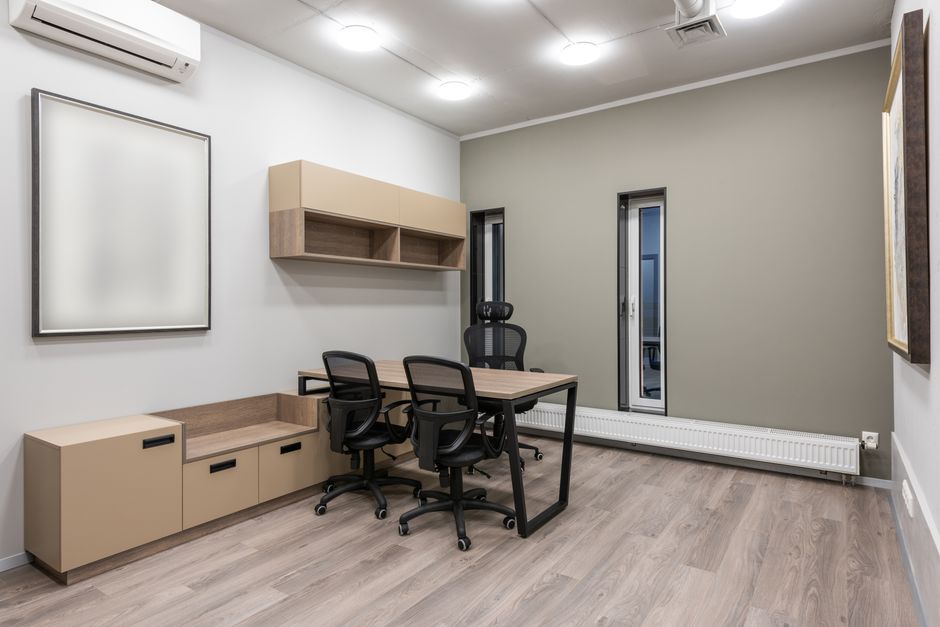
Nurse stations, pharmacy counters, and clinical work areas demand frequent forward-leaning postures. Entering patient data, verifying medication orders, answering phones, and reaching for supplies all involve neck flexion and shoulder forward rotation. A NIOSH Health Hazard Evaluation (HHE 2016-0042-3306) conducted in a hospital pharmacy documented repeated trunk and shoulder forward postures, wrist deviation, and neck symptoms. The evaluation noted that many employees did not adjust available workstation features because adjustments were not intuitive or quick.
The typical seated task at a nurse station requires the user to lean forward 10–20 degrees to bring their head closer to a monitor or paperwork. Without a chair designed to support this posture, the user either perches on the front edge of the seat—losing lumbar support—or round their lower back. This is where forward tilt medical seating enters the discussion. A chair that allows the seat pan to tilt forward approximately 5° can keep the pelvis in a neutral position while the trunk leans forward, maintaining contact with the lumbar support. For tasks requiring rapid sit-stand transitions—common in medication preparation—the same forward tilt makes it easier to rise without twisting the spine.
For laboratory and pharmacy roles that involve standing-height counters, ergonomic stools for healthcare workers provide a better solution. Stools with a wider height range, foot rings, and stable five-star bases allow clinicians to sit at a higher level while still having foot support. These stools reduce the need to bend from the waist when reaching for supplies on upper shelves.
Why Standard Office Chairs Fall Short
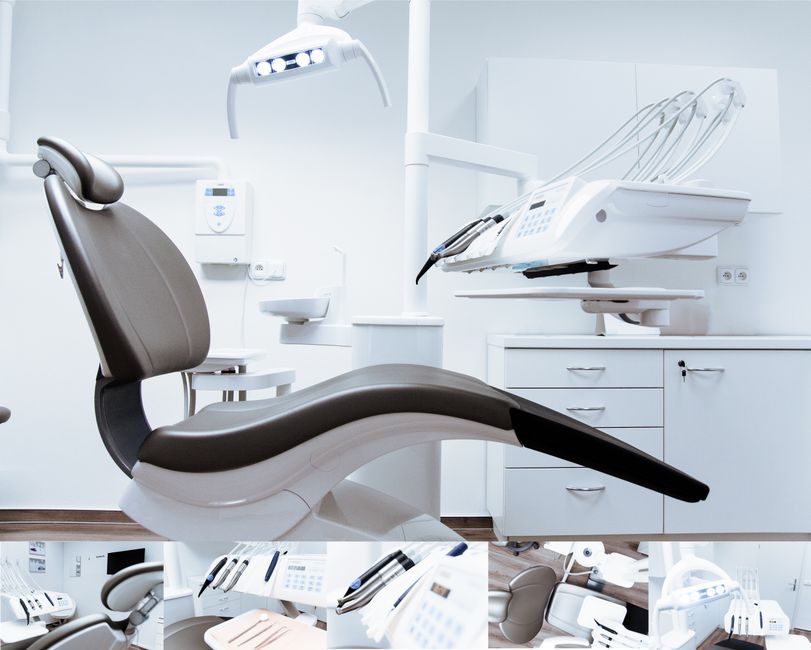
A typical office chair is designed for a single user in a fixed environment. Clinical seating must accommodate multiple shift workers, withstand frequent cleaning with hospital-grade disinfectants, and support a wide range of body sizes. OSHA’s Computer Workstations checklist provides the minimum specifications for shared seating: seat height adjustability, seat depth adjustment, and lumbar support that can be repositioned. In a clinical setting, these become non-negotiable.
| Feature | Standard Office Chair | Required Clinical Workstation Chair |
|---|---|---|
| Seat height range | 16–20 inches | 15–21 inches (to accommodate shorter users) |
| Seat depth adjustment | Fixed or limited slide | Minimum 2.5 inches of slide |
| Lumbar support | Fixed bump | Height and depth adjustable, contour shaped |
| Armrests | Fixed or minimal adjustment | Height/width/pivot adjust, or removable for easy access |
| Casters | Carpet or hardwood casters | Soft dual-wheel casters for hard floors, with braking optional |
| Cleanability | Fabric upholstery, crevices | Vinyl or polyurethane with sealed seams, no exposed foam |
The OSHA purchasing guide also recommends that chairs have a forward tilt feature of at least 5° and that lumbar support remains in contact with the user even when tilting. Many standard chairs lack this because they are designed for a neutral upright posture. In practice, a clinical chair without forward tilt and continuous lumbar support forces nurses to choose between slouching or working without back support.
Adjustable nurse station seating solutions must also be quick to operate. NIOSH observed that shared workstations often had adjustment mechanisms that were not intuitive—users simply did not adjust them. The ideal chair has pneumatic seat height, a lever for seat depth, and a separate control for lumbar position, all operable from the seated position without twisting. Color-coded or icon-based quick-reset settings help the next shift adapt the chair rapidly.

Forward Tilt Seating: A System, Not a Single Feature
When evaluating forward tilt medical seating, it is important to understand that forward tilt is an integrated system, not an isolated angle. The seat pan must tilt forward (typically 5° adjustable) while the lumbar support follows the user’s lower back. If the lumbar support is fixed, tilting forward simply pushes the user away from the backrest—defeating the purpose. Equally critical is seat depth: if the seat is too long, a shorter user cannot stay in contact with the lumbar support when tilting forward.
The forward tilt range should be lockable in several positions. Some clinical tasks require a neutral posture (e.g., phone calls), while others require more forward lean (e.g., charting on a tablet). A chair that locks reliably in any tilt angle within its range gives the user choice. The same mechanism should allow a slight backward tilt for reclining during breaks—though in a shared workstation, users may prefer a simple forward tilt lock and tension control for the backrest.
We have seen facilities try to save money by ordering chairs with forward tilt but without matching seat depth and lumbar adjustability. The result is a feature that exists on paper but does not deliver in practice. When specifying, ask for a demonstration with users of different statures. A 5th percentile female and a 95th percentile male should both be able to achieve a comfortable forward tilt posture with lumbar contact.

ROI: Turning Seating into a Retention Asset
The NSI National Health Care Retention & RN Staffing Report for 2026 reports that the average hospital lost 17.6% of its staff RNs per year, equating to an average annual loss of $5.19 million per hospital from RN turnover alone. The average cost to replace one bedside RN is $60,090, including recruitment, hiring, orientation, and reduced productivity during ramp-up. Each percentage point improvement in RN turnover saves the average hospital $294,976 annually.
Can a chair reduce turnover? Not alone. But a poorly specified chair is part of the physical environment that contributes to dissatisfaction, discomfort, and injury. When we run a scenario model for a 100-seat nurse station project, the math is revealing. If the entire ergonomics program (including seating, adjustable workstations, and training) contributes to even a 0.25 percentage point reduction in RN turnover, and we conservatively attribute 10% of that improvement to seating, the annual value from that 100-seat investment is approximately $7,374 ($294,976 × 0.0025 × 0.10). That is $73.74 per seat per year. Over the five-year typical life of a clinical chair, the cumulative value per seat is $368.70—well above even a premium ergonomic chair price.
| Scenario | Value | Per Seat (100 seats) |
|---|---|---|
| 0.25 pp turnover reduction, 10% attributable to seating | $7,374 / year | $73.74 |
| 1 avoided RN exit directly attributed to seating (upper bound) | $60,090 | $600.90 |
| Combined with absenteeism & injury cost reduction (realistic scenario) | ~$20,000–$40,000 / year | $200–$400 |
These figures are based on U.S. hospital benchmarks. Facilities in other regions should substitute local RN salary, recruitment costs, and turnover rates. The key point: the financial impact of ignoring seating specifications is not zero. Investing in ergonomic hospital chairs that meet the clinical demands of shared workstations yields a measurable return when viewed through the lens of talent retention and injury prevention. A prudent procurement decision includes a pilot—measure baseline discomfort ratings, chair adjustment utilization, and any near-miss incident reports, then reassess after three to six months.
Every hospital must decide where to allocate its capital. A chair that costs $150 more per unit but reduces injuries and improves user satisfaction is not an expense; it is an investment in caregiver capacity. When budgets are tight, the chair is often the first item cut. That is a mistake. The data from BLS, OSHA, NIOSH, and NSI all point in the same direction: the chair is a critical infrastructure element for any facility that relies on skilled clinical staff.
From our experience managing medical furniture projects across more than 20 countries, we have learned that the best outcomes come from specifying seating as part of a holistic clinical furniture solution. The chair must be evaluated alongside the work surface height, monitor placement, and workflow patterns. That is why we recommend beginning with an ergonomic audit before making purchasing decisions. The right chair—like the right any critical tool—reduces friction and lets caregivers focus on what matters most: patient care.
ZHOBAI Medical Furniture
Ready to Apply These Principles to Your Project?
Our engineering team responds to all project briefs within 24 hours. Share your FF&E scope — room count, property type, target timeline, and budget range — and we’ll provide a factory-direct assessment and indicative pricing within one business day.