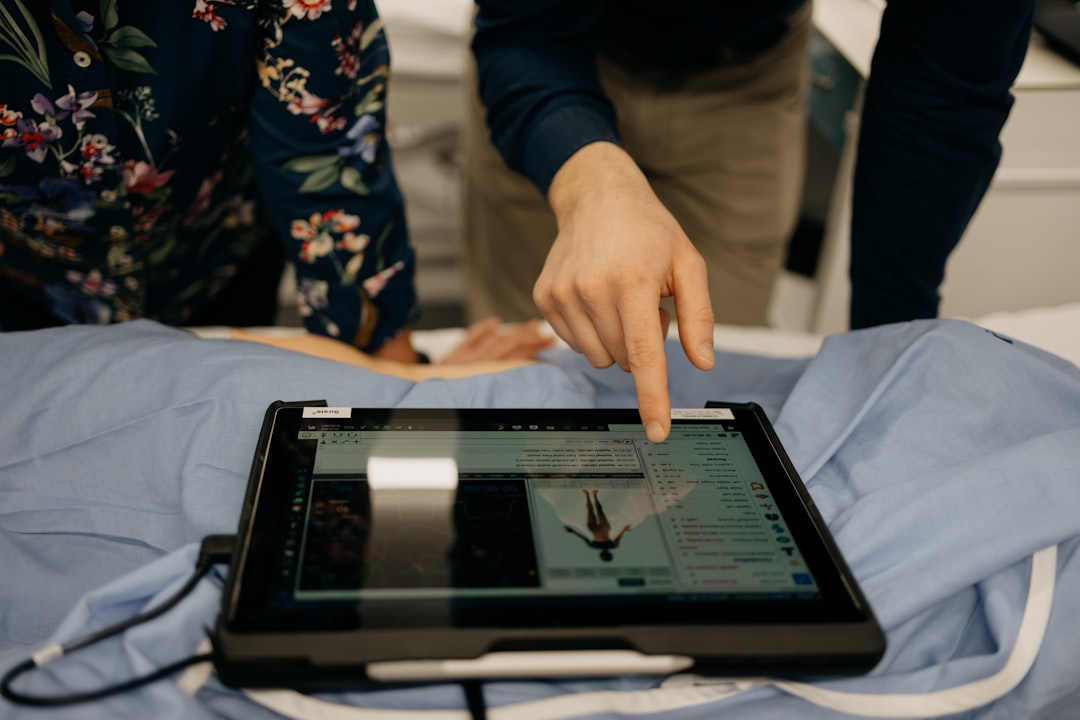
If your facility uses UVC carts, fogging or electrostatic spray, a supplier’s chemical-wipe test report does not cover your disinfection method. The Word requirements document you issue is where that gap is closed or left open. BIFMA G8.1-2026, published 20 February 2026, added touchless disinfection to its surface-durability scope and replaced BIFMA HCF 8.1-2019. It is a voluntary U.S. guideline, not a law. Your leverage is contractual: name the exact test agents, cycles and tier in the RFQ, then verify shipping product matches the tested sample. This article is about writing that document — the specification clauses, evidence requests and inspection milestones that make a touchless disinfection hospital furniture specification enforceable rather than aspirational.
What the Word requirements document must state about BIFMA G8.1-2026
Most RFQs fail at the first clause. They say “surface durability tested to BIFMA” without naming the edition, the tier or the test agent. That sentence is unenforceable because it does not tell the supplier what to test against.
Learn more about FGI 2026 code hospital casework surfaces.
BIFMA International published G8.1-2026, “Furniture Surfaces: Design and Durability for Cleaning, Sanitizing, and Disinfecting Guideline,” on 20 February 2026, replacing BIFMA HCF 8.1-2019 (BIFMA International). The guideline defines protocols and acceptance criteria for resistance to cleaning, sanitizing and disinfecting (CSD) products. BIFMA states it is a voluntary guideline and is not intended to establish health or safety-based claims. The 2026 edition was a four-year committee effort.
Three facts change how you write the document:
- Scope now explicitly includes commercial (non-healthcare) settings, alongside healthcare.
- A tiered approach applies, with separate conformance statements for healthcare versus commercial applications.
- Annex and appendix content addresses ACT test methods, ultraviolet germicidal irradiation (UVGI) and other supplemental topics.
Your Word document should therefore contain a clause that reads, in substance: “Surface durability shall be evidenced by an accredited third-party report referencing BIFMA G8.1-2026, healthcare tier conformance statement, naming the test agent, concentration, dwell time and cycle count.” That is a contractual adoption of a voluntary guideline. It binds the supplier because you put it in the purchase order, not because any regulator requires it.
Do not write “BIFMA certified.” BIFMA does not certify furniture against G8.1. It publishes a guideline. A supplier claiming certification is either misreading the document or misrepresenting it. Ask for the report, not the badge.
Why chemical-wipe-only evidence fails for UVC, fogging and electrostatic spray
The 2026 edition acknowledges emerging touchless disinfection approaches — UVC, fogging and electrostatic spray — alongside its primary focus on chemical cleaning and disinfection (BIFMA International). That acknowledgement matters because the failure modes are different.
A chemical wipe acts on the surface for seconds, at a known concentration, with mechanical removal. UVC delivers cumulative dose over minutes and degrades polymers through photo-oxidation. Fogging deposits a fine aerosol that reaches seams, hinges and drawer interiors, then leaves residue. Electrostatic spray wraps surfaces and can concentrate charge at edges and hardware.
A report covering only a quaternary ammonium wipe does not evidence resistance to UV dose or to the residue behaviour of a fogged peracetic acid product. If your infection-control protocol includes any of those methods, the Word document must name them as test exposures. Otherwise you are buying furniture tested against a disinfection regime your facility does not run.
This is the practical core of a defensible touchless disinfection hospital furniture specification: the test exposures in the report must match the disinfection methods in your facility’s SOP. Anything else is a paper trail that will not survive an infection-control audit or a warranty dispute.
Healthcare tier versus commercial tier: getting the conformance statement right
The tiered structure is where overseas buyers most often mis-specify. A distributor sourcing for a clinic may accept a commercial-tier statement and later discover the end user’s infection-control committee expects the healthcare tier. The reverse error — demanding healthcare tier for a non-clinical office fit-out — adds cost and lead time without benefit.
| Requirement in the Word document | Healthcare tier | Commercial tier | Buyer action |
|---|---|---|---|
| Conformance statement | Healthcare tier statement referencing BIFMA G8.1-2026 | Commercial tier statement referencing BIFMA G8.1-2026 | State the tier in the RFQ; do not accept a generic “BIFMA tested” line |
| Test agent named | Exact CSD product, concentration and dwell | Exact CSD product, concentration and dwell | Require the agent to match your facility SOP |
| Touchless exposure | UVC dose, fogging chemistry or electrostatic spray named if used | Only if the facility uses touchless methods | List your actual methods; omit methods you do not run |
| Cycle count | Stated in the report; match expected service life | Stated in the report | Ask for cycles per year assumption in writing |
| Production material match | Report must reference production finish, not catalogue sample | Same requirement | Add a no-substitution clause and mid-production inspection |
BIFMA positions G8.1 as the reference for translating surface-durability findings into specification language for healthcare and senior-living environments (BIFMA International). That is the intended use: a specification template. Your Word document is where that translation happens, and the tier choice is the first decision.

Reading a Chinese test report: what GB/T 46489-2025 does and does not prove
China published GB/T 46489-2025, Hospital Furniture — General Technical Requirements, on 5 October 2025, effective 1 May 2026. It is a recommended (GB/T) national standard and the first unified Chinese hospital-furniture standard. It interprets antibacterial performance for emergency/outpatient and ward areas at a ≥90% antibacterial rate, tested under a referenced Chinese method (SAC/TC 480, interpreted by Shanghai Institute of Quality Inspection and Technical Research).
What it proves: the factory has testing infrastructure, understands antibacterial performance claims, and can produce a domestic report with a defined method. That is a supply-chain maturity signal.
What it does not prove: compliance with your destination requirement. GB/T is a Chinese domestic standard. It does not replace BIFMA G8.1-2026, and it does not satisfy any EU, UK or Gulf requirement. A ≥90% antibacterial rate under a Chinese method is not the same claim as a CSD resistance report under BIFMA G8.1-2026.
In the Word document, add a clause requiring the supplier to disclose which standard each report title actually cites. Reports are often bundled and labelled loosely. A report titled “antibacterial test” may cite GB/T 46489, while a report titled “surface durability” may cite BIFMA G8.1-2026. Both can be valid for different purposes. Neither substitutes for the other. Ask for a mapping table: destination requirement, cited standard, test agent, lab, date.
Cost, MOQ and lead-time impact of locking a tested finish
Adding UV or spray-cycle testing is not a formality. It is a cost and lead-time line, and it interacts with MOQ.
When you require a new test exposure, the supplier must determine which finishes require re-testing. A high-pressure laminate, a powder-coated steel frame and an ABS edge band may each behave differently under UVC dose. Re-testing multiple finishes multiplies lab cost and calendar time. If you lock the tested finish as a production specification, you also reduce the supplier’s flexibility to substitute a comparable material when a batch is short — which can raise the effective MOQ for that finish or extend lead time.
Three planning assumptions to state in the document, clearly labelled as buyer-side estimates rather than sourced figures:
- Each additional finish submitted for UV or spray-cycle testing adds a separate lab line and a separate report; budget for one line per finish, not one line per project.
- Locking a tested finish means the supplier cannot swap to an untested equivalent without a change order; expect this to be priced into the quotation.
- If your order quantity is below the supplier’s minimum for the locked finish, the supplier may propose a higher MOQ or a longer lead time. Ask for both numbers in the quotation, not after award.
These are planning assumptions, not published rates. The point is to force the trade-off into the quotation stage, where you can compare suppliers on the same basis.
Our engineering team at ZHOBAI Medical Furniture handles this by mapping the tested finish to the production bill of materials at the quotation stage, so the buyer sees the MOQ and lead-time effect before the purchase order is issued. That is a process discipline, not a product claim.
QC and inspection milestones that verify shipping product matches the tested sample
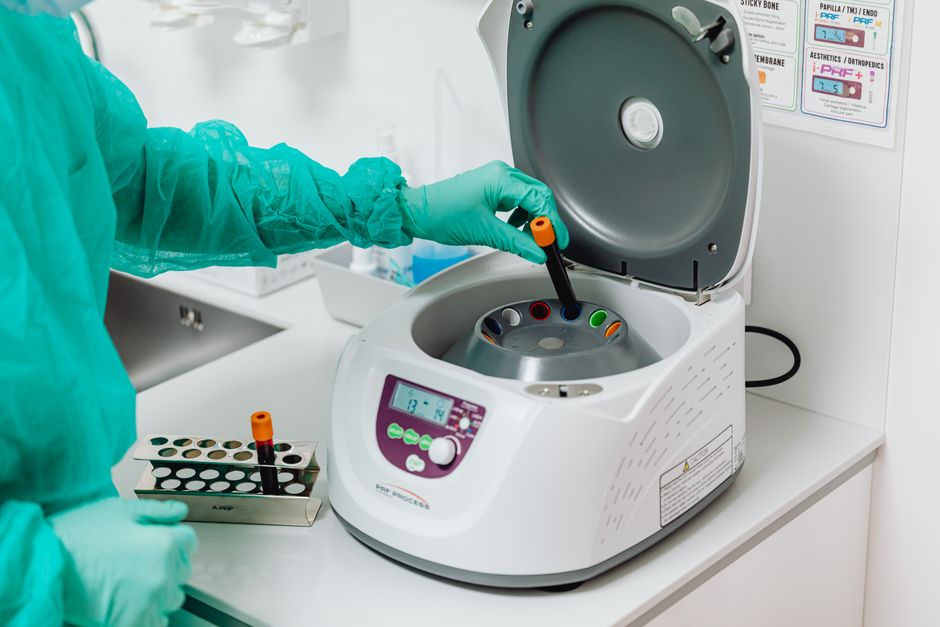
A test report is only as good as the product it describes. The most common failure is a report on a catalogue sample that does not match the shipping finish, edge band or hardware. The Word document should convert the report into an inspection obligation.
Two milestones do most of the work:
- Mid-production inspection. Verify the finish, edge sealing and hardware match the tested sample. Check the edge banding material and thickness against the specification, and confirm the finish supplier and batch. Photograph the edge seal at a drawer front and a worktop edge.
- Pre-shipment inspection. Verify the shipping configuration matches the approved sample and the tested material. Confirm no substitution occurred. Check that the conformance statement and test report reference numbers are included in the document pack.
Add a no-substitution clause: the tested material and finish are locked; any change requires written buyer approval and may require re-testing at the supplier’s cost. This clause is what makes the test report meaningful at the container-loading stage.
For a broader view of how cleanability requirements are documented across markets, our guide on hospital furniture cleanability compliance covers the overlap between test evidence and inspection practice.
Destination-market caveats: obligations vary by intended use, classification and market
Do not import one market’s rule as universal. Obligations for any given product depend on intended use, product classification and destination market. Never assume CE marking or FDA clearance applies to all medical furniture. A bedside cabinet, an examination couch and a powered medical bed are classified differently, and the applicable requirements follow the classification and the destination.
Fire and accessibility rules are also destination-specific. U.S. healthcare design requirements are increasingly risk-based, and jurisdictions adopt different editions of the relevant guidelines (Fitzemeyer & Tocci). Industry practice shows fire-rating and cleanability standards differ by market — CAL 133, BS 7176, AS/NZS 3837 and GB 17927 are not interchangeable (Hongye Furniture Group). Use these as a caution, not as proof of any threshold.
In the Word document, separate the clauses into three groups: (1) surface durability and disinfection exposure, which is the subject of this article; (2) fire performance, which is destination-specific; (3) accessibility, which is also destination-specific. Mixing them into one “compliance” clause makes it impossible to tell which requirement applies to which product. For accessibility documentation specifically, our guide on accessible medical equipment standards documentation explains how to structure that evidence request.
RFQ and inspection checklist for the Word requirements document
Use this checklist as the annex to your RFQ. Each line is a clause or a document request, not a general statement.
- State the edition: BIFMA G8.1-2026, not “BIFMA” and not “BIFMA certified.”
- State the tier: healthcare or commercial, with the corresponding conformance statement.
- Name the exact test agent, concentration, dwell time and cycle count for each chemical exposure.
- Name each touchless method your facility uses — UVC dose, fogging chemistry, electrostatic spray — as a test exposure.
- Require an accredited third-party lab report, with the lab’s accreditation scope stated.
- Require the report to reference production materials and finish, not a catalogue sample.
- Add a no-substitution clause locking the tested finish, edge banding and hardware.
- Require disclosure of which standard each report title cites; add a mapping table to your destination requirement.
- Require a mid-production inspection that verifies finish and edge seal match the tested sample.
- Require a pre-shipment inspection that verifies the shipping configuration matches the approved sample.
- Confirm MOQ and lead-time impact of the locked finish in the quotation, not after award.
- Keep fire and accessibility clauses separate and destination-specific.
- Confirm the supplier can provide third-party QC reports at the mid-production milestone and has shipped to your destination port before.
Two FAQs that buyers raise after the checklist is drafted:
Does adopting BIFMA G8.1-2026 in my RFQ make it a legal requirement? No. It is a voluntary guideline. It becomes binding only because you write it into the purchase order. That is also why you must name the edition and tier — a vague reference gives the supplier room to interpret.
Can a GB/T 46489-2025 report replace a BIFMA G8.1-2026 report? No. GB/T 46489-2025 is a Chinese domestic recommended standard. It evidences testing capability but does not satisfy a destination-market requirement. Ask for both if both are relevant, and ask the supplier to map each report to the requirement it addresses.
The document that gets signed is the document that gets enforced. If the Word requirements document names the edition, the tier, the test agent, the cycle count and the inspection milestones, the supplier has a clear target and you have a clear basis for acceptance. If it says “BIFMA tested,” you have neither. We build the tested finish into the production bill of materials at quotation stage and hold it through mid-production and pre-shipment inspection, because that is the only point at which the report and the shipping product can still be made to match.
ZHOBAI Medical Furniture
Ready to Apply These Principles to Your Project?
Our engineering team responds to all project briefs within 24 hours. Share your FF&E scope — room count, property type, target timeline, and budget range — and we’ll provide a factory-direct assessment and indicative pricing within one business day.